••
Ghana’s Minerals Income Investment Fund Posts GH¢1.1bn Profit as World Gold Council Backs Mining Formalisation
•3 min read•8 sources
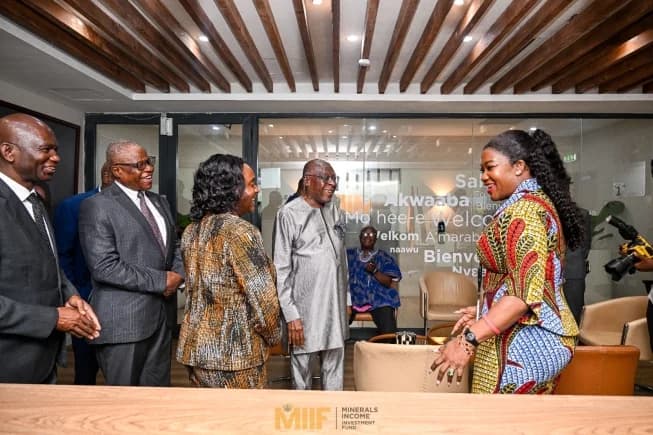
Ghana’s mining sector is witnessing a period of robust growth and structural transformation, headlined by the Minerals Income Investment Fund (MIIF) reporting an audited profit of GH¢1.1 billion for the 2025 financial year. This performance comes despite significant regulatory amendments that reduced mineral royalty allocations from nearly 100% to just 2%. The fund’s resilience is further underscored by its royalty collections, which rose to GH¢5.4 billion in 2025 and reached a staggering GH¢5.39 billion in the first half of 2026 alone. This surge, attributed to high global gold prices and improved compliance among medium-scale operators, has positioned MIIF as a continental blueprint, attracting a high-level Zambian delegation led by Permanent Secretary Mwaka Mukubesa to study Ghana’s sovereign investment strategies.
Beyond its balance sheet, MIIF is actively expanding its strategic footprint through new partnerships aimed at industrialisation. The fund is currently in talks with the Ghana International Bank (GHIB) to unlock investment opportunities across the mining value chain, with a specific focus on the burgeoning lithium industry and structured finance for international investors. According to MIIF CEO Justina Nelson and GHIB CEO Ian Greenstreet, the collaboration seeks to leverage mineral revenue to enhance the broader economic landscape. These efforts to diversify and strengthen the sector’s financial foundation are critical as the fund manages its growing retained earnings and seeks to mitigate risks such as potential gold price volatility and operational disruptions.
A pivotal shift is also underway in the artisanal and small-scale gold mining (ASGM) sector through a landmark partnership with the World Gold Council (WGC). Ghana and the WGC have signed a Memorandum of Understanding (MoU) supported by an initial US$250,000 grant—part of a larger US$1 million initiative—to formalise the sector. This collaboration, spearheaded by the Ministry of Lands and Natural Resources, aims to establish a national network of gold processing plants and a robust regulatory framework. Minister Emmanuel Armah-Kofi Buah and WGC CEO David Tait emphasized that this move will improve traceability, provide incentives for responsible mining, and combat the illegal gold trade, potentially serving as a global model for transparent value chains.
Concurrent with these developments, the Bank of Ghana has implemented significant changes to the sector’s liquidity management. The central bank announced the termination of its pre-financing arrangement for domestic gold purchases, a decision that alters the liquidity sources in the banking system. This policy shift, announced by Governor Dr. Johnson Pandit Asiama, is being monitored by the Monetary Policy Committee for its implications on inflation and private sector credit. The move signals a broader transition toward market-driven gold acquisition and enhanced foreign exchange reserve management through the Domestic Gold Purchase Programme initiated to bolster local acquisitions.
These multifaceted developments—ranging from MIIF’s record profitability and international influence to the formalisation of artisanal mining—highlight a concerted effort to optimize Ghana’s mineral wealth. By aligning financial performance with international standards and domestic regulatory reforms, Ghana is seeking to ensure that its mining sector remains a cornerstone of sustainable development. The next phase will likely focus on the implementation of the WGC-backed processing plants and the successful navigation of global market risks, as the country cements its status as a leader in African mineral resource governance.
This story touches markets covered on Anansi Intelligence ↗.
Live rates
Bank of Ghana policy rate →More from business
Continue exploring similar stories


