••
Advancing Healthcare Integration and Disaster Relief: Ghana and Sub-Saharan Africa Launch Strategic Initiatives
•3 min read•3 sources
Sub-Saharan Africa is witnessing a dual push toward improved public health and enhanced disaster resilience, highlighted by the launch of the M-CARE project and urgent relief efforts following tidal wave destruction in Ghana. The M-CARE initiative, a five-year program spanning Ghana, Kenya, and Uganda, marks a significant shift toward integrated, person-centered care for individuals suffering from chronic conditions and mental health challenges. Simultaneously, the National Disaster Management Organisation (NADMO) in Ghana has intensified its humanitarian response to environmental crises affecting coastal communities, underscoring the urgent need for sustainable infrastructure and immediate aid.
The M-CARE project aims to dismantle fragmented healthcare delivery by implementing evidence-based guidelines from the World Health Organization (WHO) at the primary care level. Funded by the European Union Horizon and involving a coalition of academic and health institutions, the project recently held its inaugural Steering Committee meeting in Ghana to establish governance and strategic objectives. This initiative is designed to transform how chronic and mental health services are provided, ensuring that patients receive holistic support rather than disjointed treatments. To further this goal, the project has scheduled its first major webinar for May 28, 2026, where global experts will discuss practical solutions for improving primary care across the continent.
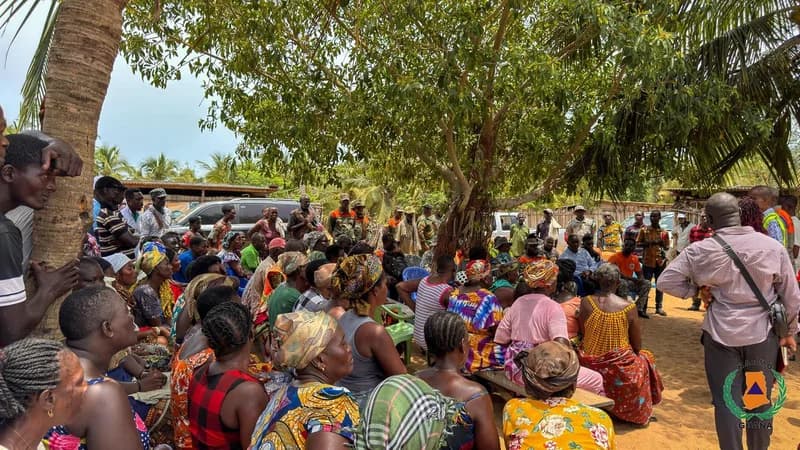
While health systems are being strengthened, environmental challenges continue to threaten the stability of local communities. In Ghana's Anlo District, particularly in areas like Fuveme, recent tidal waves have caused extensive destruction, displacing residents and disrupting local economies. NADMO Director-General Joseph Bikanyi Kuyon recently led a delegation to the affected sites, highlighting the devastating intrusion of seawater into the River Volta. This environmental shift has crippled the livelihoods of local farmers and fishermen, as rising salinity and water levels destroy crops and disrupt traditional fishing grounds.
In response to the crisis, NADMO has deployed essential relief supplies to support the impacted households. The distributed items include staples such as rice, maize, peas, and cooking oil, along with mosquito nets to prevent disease outbreaks in the flooded regions. Beyond immediate aid, Director-General Kuyon emphasized the necessity of a collaborative approach involving the government and local stakeholders to develop long-term engineering and environmental solutions. These measures are critical to preventing future tidal incidents and ensuring the survival of communities caught between the encroaching sea and the River Volta.
These developments reflect a broader regional commitment to safeguarding African citizens through both proactive development and reactive crisis management. While the M-CARE project seeks to build a resilient health framework for the future, the ongoing efforts in the Anlo District highlight the immediate necessity of climate adaptation and humanitarian support. Together, these initiatives illustrate the multifaceted approach required to address the complex socio-economic and environmental challenges currently facing Sub-Saharan Africa.
This story touches markets covered on Anansi Intelligence ↗.
More from africa
Continue exploring similar stories


