••
Bridging the Governance Gap: Local Leaders and MPs Rally for Resources Amidst Systemic Leadership Challenges
•3 min read•32 sources
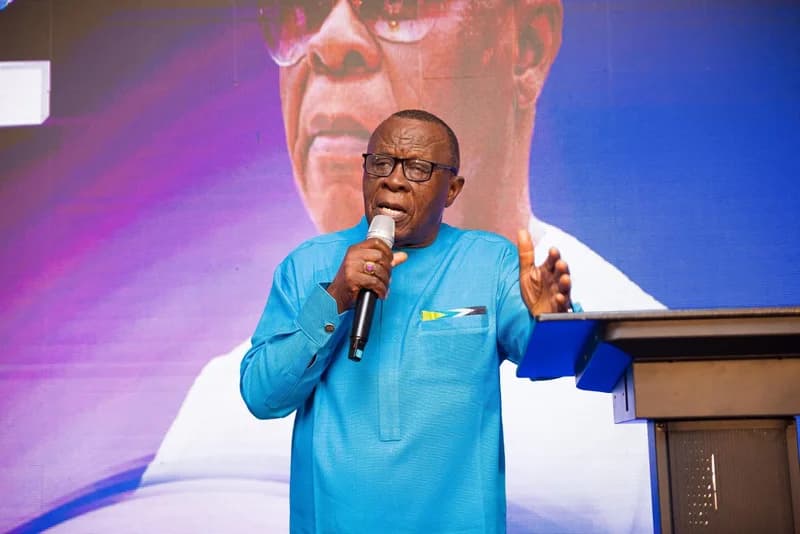
Ghana’s political landscape is currently defined by a sharp contrast between systemic governance critiques and localized efforts to address urgent infrastructure deficits. Dr. Paul Kofi Fynn and Richard Fiadomor, President of the Chamber of Local Governance (CHALOG), have both raised alarms over the 'leadership crisis' hindering national progress. Dr. Fynn criticized the culture of 'square pegs in round holes,' where political loyalty is prioritized over competence, leading to the failure of state institutions like PBC Shea Limited. Similarly, CHALOG highlighted that excessive central government interference in Accra continues to undermine the autonomy of local assemblies, stifling their ability to address community-specific needs effectively.
In response to these systemic gaps, Members of Parliament (MPs) across the country have launched various interventions to support health and education. In Jirapa, MP Cletus Seidu Dapilah donated essential medical supplies to St. Joseph Catholic Hospital following reports of critical shortages, while the Paramount Chief of Jirapa, Naa Dinaa Donglabong Ganaa III, appealed for the establishment of a new regional hospital. Meanwhile, education remains a focal point as candidates prepare for the Basic Education Certificate Examination (BECE). MPs Nana Agyei Baffour Awuah (Manhyia South) and Prof. Alidu Mahama Seidu (Tamale Central) have provided mathematical sets and organized extra classes to bridge the academic divide between northern and southern Ghana. In Sissala West, MP Mohammed Adams Sukparu inaugurated a scholarship scheme and teacher awards to combat a local shortage of over 200 educators.
Institutional oversight is also intensifying as Parliament’s Select Committee on Sanitation and Water Resources conducts nationwide assessments. During a visit to Prestea Huni-Valley, Municipal Chief Executive Dr. Matthew Kofi Ayer highlighted the financial strain of relying on private waste contractors due to broken equipment, echoing a broader call for improved sanitation logistics. This lack of resources is further reflected in the education sector, where the headmaster of Obenimase M/A JHS recently appealed for basic furniture and ICT laboratories to prevent student performance from declining. These infrastructure challenges are compounded by transparency concerns within the health sector, as NPP Deputy Protocol Director Kwabena Frimpong criticized the government’s recruitment process for trained health professionals as opaque and unfair.
The struggle for integrity in governance is further underscored by recent events in the Ashanti and Eastern Regions. The National Anti-Illegal Mining Operations Secretariat (NAIMOS) successfully dismantled a multinational galamsey syndicate, though public trust remains fragile following a viral video allegedly showing a police officer extorting bribes from illegal miners. Additionally, in Adamorobe, the enstoolment of actor Mikki Osei Berko as a chief has sparked a legal and traditional dispute, highlighting the complexities of local authority. Collectively, these developments suggest that while individual leaders are making strides in constituency development, sustainable progress in Ghana will require a fundamental shift toward meritocracy, transparency, and genuine decentralization.
This story touches markets covered on Anansi Intelligence ↗.
Related topic
NPP (New Patriotic Party): Latest News →More from politics
Continue exploring similar stories


