••
Ghana’s Economy Shows Resilience with Lending Rates Hitting 15.64% as Experts Warn Against Sustained Infrastructure Spending Cuts
•3 min read•19 sources
Ghana’s economic landscape under President John Mahama is showing signs of stabilization, marked by a significant drop in commercial lending rates and manageable inflation. By June 2026, average commercial lending rates fell to 15.64%, representing one of the sharpest declines in financing costs in recent years. This shift was accompanied by a dramatic reduction in the Ghana Reference Rate, which plummeted from 23.80% to 10.02%. Finance Minister Dr. Cassiel Ato Forson, in his 2026 Mid-Year Fiscal Policy Review, highlighted that inflation has remained stable at 5.3%, even as the country navigated external shocks such as Brent crude prices surging to $103 per barrel. This recovery, which economist Dr. Adu Owusu Sarkodie notes began prior to the current administration's inauguration in January 2025, reflects a sustained commitment to macroeconomic stability.
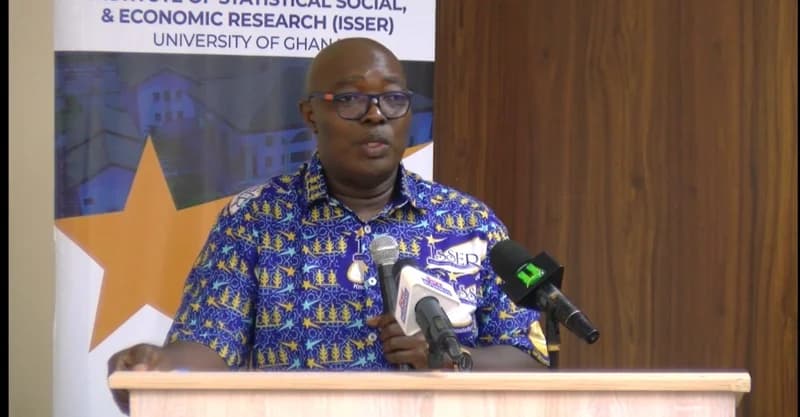
However, the methods used to achieve these fiscal targets have drawn scrutiny from leading research institutions. The Institute of Statistical, Social and Economic Research (ISSER) warned that the government’s fiscal performance is heavily reliant on spending cuts rather than enhanced revenue mobilization. ISSER’s analysis reveals that total spending fell 20.6% below budget, with capital expenditure (CAPEX) missing its target by a staggering 41%. Professor Robert Darko Osei and Professor Godfred Bokpin expressed concerns that such drastic reductions in infrastructure investment could undermine the government's "Big Push" initiative and stifle long-term growth. Furthermore, Bokpin pointed out that domestic revenue collection remains a structural challenge, with the tax-to-GDP ratio reaching only 7.7% by mid-2026, slightly missing its targets despite ongoing IMF-backed reforms.
In the financial markets, investor confidence appears robust, evidenced by a 79.2% oversubscription in a recent Treasury bill auction. Bids totaled GH¢10.51 billion against a target of GH¢5.87 billion, with the 364-day bill attracting the highest demand. While yields for shorter-term bills have declined slightly, the 364-day yield rose to 12.98%, signaling that markets are closely monitoring fiscal sustainability and inflation expectations. Commercial banks are currently navigating a complex environment; while lower lending rates are a boon for businesses and households, stable deposit rates are putting pressure on interest margins, prompting banks to explore alternative revenue streams to maintain profitability.
Looking forward, the success of the administration’s flagship 24-Hour Economy initiative is seen as a critical pillar for long-term productivity. Professor Anthony Amoah of the University of Environment and Sustainable Development argues that while the 24-Hour Economy Authority Act provides a necessary legal framework, the initiative’s success depends on robust infrastructure, reliable electricity, and private-sector leadership. Experts advocate for a phased implementation focusing on export-oriented sectors like agro-processing to diversify an economy currently heavily reliant on gold. As Ghana moves through the second half of 2026, the government faces the delicate task of balancing fiscal discipline with the public investments necessary to ensure this recovery leads to sustainable job creation and industrial growth.
This story touches markets covered on Anansi Intelligence ↗.
Related topic
John Mahama: Latest News & Updates →Live rates
Ghana gold price →More from business
Continue exploring similar stories


