••
Ghana Ramps Up Infrastructure Accountability and Climate Resiliency Efforts Amidst Project Delays
•3 min read•32 sources
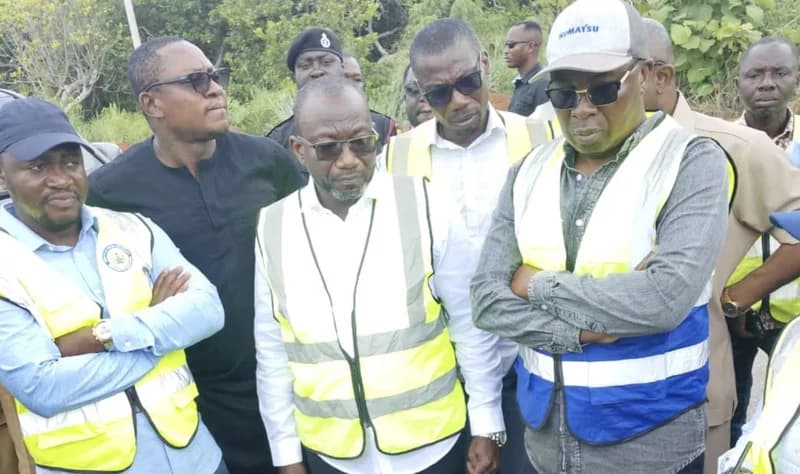
The Ghanaian government and parliamentary oversight committees have intensified their focus on infrastructure delivery, signaling a new era of contractor accountability. Roads and Highways Minister Kwame Governs Agbodza has adopted a rigorous approach, dubbed the "Agbodza Axe," which includes unannounced site visits and firm ultimatums to contractors. A primary success of this initiative is the rehabilitation of the Han-Tumu Road in the Upper West Region, a critical trade route to Burkina Faso that had been neglected for over 30 years. Conversely, the Minister has threatened to terminate the Techiman-Wenchi road contract due to slow progress despite a GH¢66 million disbursement. Simultaneously, Parliament’s Select Committee on Roads and Transport has expressed sharp disappointment with Amandi Construction over significant delays on the Western Railway Line, where sections of the Kojokrom–Manso project remain abandoned despite being reportedly 93% complete.
Economic and energy infrastructure projects in the Ashanti Region are also under close scrutiny. Local Government Minister Ahmed Ibrahim revealed that the cost for the stalled Kumasi Central Market Phase II project has escalated to over •305 million, primarily due to suspension claims and unpaid certificates. To address power reliability in the region, Energy and Green Transition Minister Dr. John Abdulai Jinapor is conducting a working tour to inspect transformer upgrades at the Ridge Substation and critical sub-transmission lines. Meanwhile, in the Central Region, the Assin South District has launched a 24-Hour Economy model market in Assin Andoe, featuring 24/7 banking, healthcare, and security facilities, aligning with the national “resetting agenda” to stimulate local trade and modern governance.
On the environmental front, Ghana faces a staggering $22.6 billion funding gap to meet its climate action goals and protect vulnerable communities. Minister of State for Climate Change and Sustainability, Seidu Issifu, emphasized that with declining international grant support, the nation must pivot toward private investment and carbon markets. He noted that climate action is a strategic investment in Ghana's industrial transformation rather than an act of charity, particularly as the country suffered $195 million in disaster-related losses in 2020. The government is now moving to establish a National Climate Change and Sustainability Hub and increase solar power generation by 200 megawatts to enhance national resilience.
Local governance and transparency efforts are also seeing significant investment. The Bolgatanga Municipal Assembly reported receiving GH¢10.59 million from the District Assemblies Common Fund for healthcare and education projects, while the Audit Service inaugurated a modern regional office in Kumasi to safeguard public funds. In Greater Accra, the Shai-Osudoku District procured new vehicles to bolster revenue mobilization. As the government pushes to complete high-priority projects like the Agenda 111 hospitals and various educational facilities, the emphasis remains on ensuring that taxpayer money translates into tangible, high-quality developments that serve the economic and social needs of all Ghanaians.
This story touches markets covered on Anansi Intelligence ↗.
More from politics
Continue exploring similar stories


