••
Ghana Records Highest Lending Rate in Africa as Bank of Ghana Maintains Policy Rate at 14%
•2 min read•4 sources
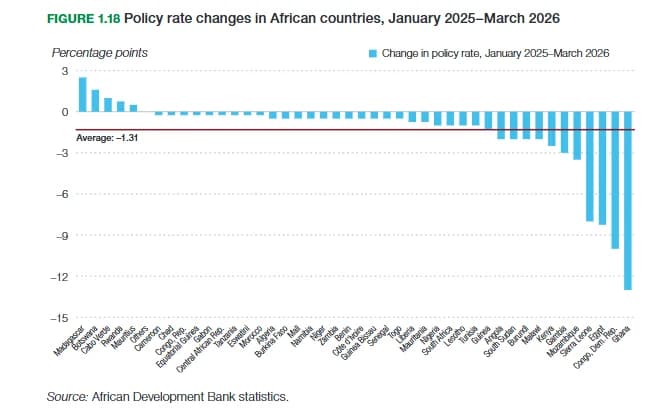
Ghana has emerged as the country with the highest cost of credit in Africa, according to the African Development Bank’s (AfDB) 2026 African Economic Outlook. Despite a dramatic halving of the central bank's policy rate over the past year, the nation’s average lending rate stood at 16.33% in April 2026. This ranking places Ghana at the top of 44 African nations surveyed, followed by the Democratic Republic of Congo and Egypt, highlighting a persistent gap between monetary policy easing and actual commercial borrowing costs. The high lending environment persists even after the Bank of Ghana aggressively reduced its Monetary Policy Rate from 28.0% in early 2025 to 14.0% by May 2026. This 14-percentage-point drop was part of a broader continental trend where cooling inflation prompted central banks to lower rates by an average of 1.33 percentage points. Ghana was one of only four countries on the continent to implement cuts exceeding eight percentage points. Consequently, the average lending rate in the country did see some improvement, falling from 20.58% in January 2026 to the current 16.33%, while the Ghana Reference Rate dropped to 10.06%. Despite the downward trend, the Bank of Ghana’s Monetary Policy Committee elected to maintain the policy rate at 14.0% during its May 2026 meeting. The committee cited ongoing risks to the inflation outlook and overall economic growth as primary reasons for this cautious stance. To further manage liquidity and stabilize the financial sector, the central bank also announced an adjustment to the Cash Reserve Ratio (CRR), setting a uniform rate of 20% for all banks, effective June 4, 2026. The AfDB report underscores that while monetary policy in 2025 adapted effectively to shifting inflation dynamics across Africa, Ghana’s credit market remains exceptionally expensive for businesses and individuals. Moving forward, the Committee plans to monitor global and domestic economic conditions closely, particularly the impact of geopolitical tensions on trade and prices. The disconnect between the policy rate and commercial lending rates remains a critical area for structural reform if Ghana aims to stimulate private sector investment and sustain long-term economic recovery.
This story touches markets covered on Anansi Intelligence ↗.
Live rates
Bank of Ghana policy rate →More from business
Continue exploring similar stories


