••
Judicial Scrutiny and Constitutional Boundaries: Ghana’s Anti-Corruption and Legislative Landscape Faces Critical Review
•3 min read•29 sources
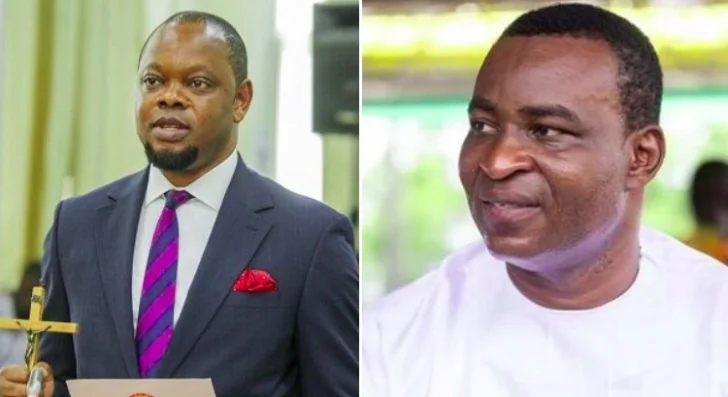
Ghana’s political and legal landscape is currently defined by a rigorous debate over the limits of institutional power and the independence of the judiciary. At the forefront is a significant High Court ruling regarding the Office of the Special Prosecutor (OSP). Deputy Attorney-General Justice Srem-Sai has defended the court’s assertion that the OSP lacks independent prosecutorial authority under Article 88 of the 1992 Constitution, requiring specific authorization from the Attorney-General. While the OSP has expressed intent to appeal, legal practitioners like Thaddeus Sory have criticized the office for prioritizing public relations over tangible courtroom outcomes. This constitutional tension is further complicated by warnings from former Attorney-General Godfred Yeboah Dame, who raised concerns about judicial bias and potential threats to public confidence, while the Ghana Law Society has simultaneously called on political leaders like Alexander Afenyo-Markin to retract remarks that allegedly undermine the judiciary's integrity.
Parallel to these constitutional debates, several high-profile criminal trials are testing the state's resolve against financial misappropriation and environmental crimes. In the GH"48.1 million National Signals Bureau (NSB) trial, the High Court recently dismissed an attempt by former Director-General Kwabena Adu-Boahene to introduce private company receipts as official evidence. The prosecution, led by Justice Srem-Sai, successfully argued that the documents were irrelevant and lacked proper witness authentication. Simultaneously, the legal battle involving Bernard Antwi Boasiako, popularly known as Chairman Wontumi, has moved toward the Court of Appeal as he seeks to challenge a ruling compelling him to open his defense in a trial concerning unlicensed mining activities.
In the legislative arena, the controversial Anti-LGBTQ+ Bill continues to dominate discourse as it undergoes parliamentary review. Minister Ahmed Ibrahim clarified that the bill originated as a Private Member's initiative rather than an Executive directive, emphasizing its non-partisan nature despite earlier challenges with sponsorship. The bill's progress has been accompanied by personal controversies, including Assin South MP Rev. John Ntim Fordjour’s public denial of viral allegations regarding his sexual orientation. Fordjour, a staunch supporter of the bill, characterized the claims as a smear campaign intended to undermine his credibility while the House prepares for further technical reviews of the legislation.
At the local and traditional levels, governance remains fraught with disputes over authority and cultural rights. A poignant situation unfolded in the Savannah Region, where the family of the late Sawla-Tuna-Kalba MP, Joseph Trumah Bayel, was forced to conduct final funeral rites without his mortal remains. The body remains held at a district hospital due to a complex land dispute involving local chiefs, prompting the family to criticize the judicial system's failure to enforce a release order. Meanwhile, in the Ashanti Region, Otumfuo Osei Tutu II asserted traditional discipline by destooling his linguist, Kyeame Kofi Nti, over allegations of extortion and misconduct. These events, alongside tensions between the Madina Municipal Assembly and the Bureau of National Investigations (BNI) over unauthorized construction, highlight the ongoing struggle to harmonize modern law enforcement with local governance and traditional authority.
This story touches markets covered on Anansi Intelligence ↗.
More from politics
Continue exploring similar stories


