••

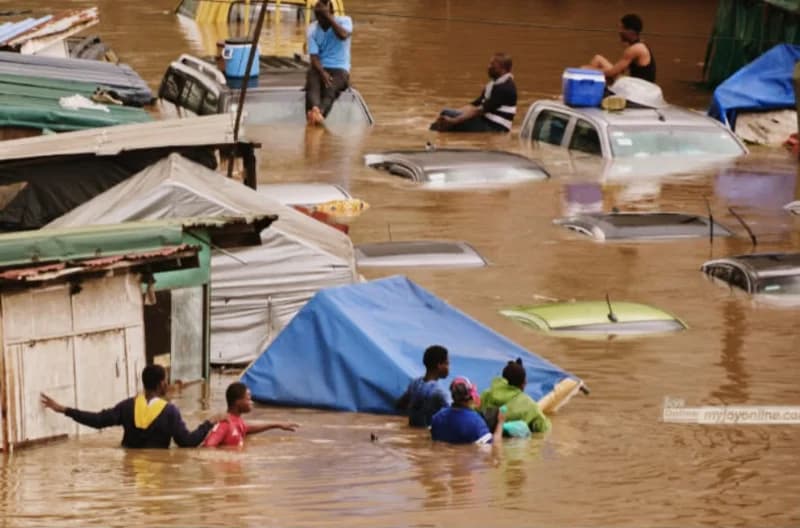
The Ministry of the Interior has issued an urgent flood alert for the Greater Accra Region, warning residents to prepare for moderate to heavy rainfall and potential thunderstorms on Monday, July 6, 2026. The Ghana Meteorological Agency (GMet) expects unsettled weather to hit low-lying areas between 4:00 a.m. and 7:00 a.m., with a 40% chance of significant flooding. This warning follows a devastating disaster on June 29 that claimed 12 lives and left seven people missing across Greater Accra. The previous floods displaced approximately 48,000 people across West Africa, prompting a solidarity visit from Sierra Leone President Julius Maada Bio to commiserate with President John Mahama and discuss regional disaster resilience.
In a direct response to the recent fatalities and the ongoing threat, the Government of Ghana has declared Friday, July 10, and Saturday, July 11, 2026, as National General Cleaning Days. This initiative, spearheaded by the Post-Flood Mitigation Committee, will cover seven regions impacted by the recent rains. Authorities are mobilizing citizens and government officials to desilt choked drains and remove debris from public spaces, framing the cleanup as a critical intervention to prevent the man-made causes of flooding, such as littering and poor waste management. Complementing these efforts, the City of Accra has unveiled a LOW-Methane Portfolio aiming to reduce waste-sector emissions by 30% by 2030, emphasizing source separation of organic waste to improve long-term urban sanitation.
Despite these immediate measures, urban planning experts and architects warn that Accra’s flood crisis is rooted in deeper structural failures. Architect Bless Mawuwoe Gborglah has highlighted that current architectural choices, specifically the prevalence of "hard landscaping" and construction in natural flood pathways, prevent the ground from absorbing water. Similarly, broadcast journalist Jacqueline Ansomah Yeboah cautioned that many residents have "normalized" flood risks, leading to a dangerous cycle of delayed awareness where the threat is only acknowledged after a disaster occurs. These experts advocate for an "Urban Continuity Intelligence Layer" to ensure that urban development decisions are informed by historical environmental data rather than reactive planning.
Infrastructure vulnerabilities continue to exacerbate the risks faced by residents during these weather events. Public outcries have intensified regarding the deteriorating state of the road in front of Korle Bu Teaching Hospital, where deep potholes are causing severe traffic gridlock and damaging vehicles. Health advocates warn that these craters pose a significant danger to emergency services, particularly ambulances trying to transport patients during heavy rains when visibility is low. As the GMet forecasts mist and fog in mountainous regions and hazardous marine conditions for fishermen, the Ministry of Roads and Highways is being urged to prioritize the rehabilitation of critical access routes to ensure emergency response remains viable during the rainy season.
This story touches markets covered on Anansi Intelligence ↗.
Related topic
John Mahama: Latest News & Updates →Continue exploring similar stories


