Ghana News AI
HomeBriefsAsk GhanaAnalysisTopicsAbout
•
•

Stay Informed

Get AI-curated news briefs from Ghana delivered to your inbox every morning. Free forever, no spam.

Explore

  • Home
  • Briefs
  • About

Categories

  • Politics
  • Business
  • Sports
  • Entertainment
  • Africa

Features

  • Analysis
  • Cedi Rates
  • Dollar to Cedi
  • Ghana Gold Price

Topics

  • All Topics
  • Armed Forces Recruitment
  • Immigration Service Recruitment
  • Fire Service Recruitment
  • Prisons Service Recruitment
  • Customs Recruitment
  • WAEC Results & News
  • Ghana Education Service

Legal

  • Privacy Policy
  • Terms of Service
Ghana News AI© 2026 Ghana News AI. All rights reserved.
Made withfor Ghana
news

Global and Domestic Health Challenges: From UK Meningitis Outbreak to Infrastructure Crises and Regulatory Crackdowns in Ghana

19th March•3 min read•3 sources
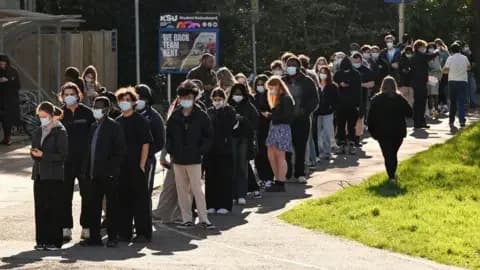
Reuters People queue to receive vaccinations at the sports centre at the University of Kent campus in Canterbury. They are all wearing masks and are lined up in the sunshine near an area of grass. There are trees behind them and signposts and there is a student noticeboard with a poster.
  1. Home
  2. /News
  3. /Global and Domestic Health Challenges: From UK Meningitis Outbreak to Infrastructure Crises and Regulatory Crackdowns in Ghana

The international healthcare landscape is currently grappling with a series of critical challenges ranging from acute infectious disease outbreaks to systemic infrastructure failures and intensified regulatory oversight. In the United Kingdom, public health officials have issued an urgent alert following a meningitis outbreak in Kent linked to a nightclub in Canterbury. The outbreak has resulted in 20 reported cases and two confirmed deaths, prompting the UK Health Security Agency (UKHSA) to initiate a massive response. This includes a vaccination program targeting approximately 5,000 students at the University of Kent and the distribution of over 6,500 precautionary antibiotic doses. Prime Minister Keir Starmer has underscored the gravity of the situation, highlighting the rapid spread of the disease and the intensive efforts underway to contain it.

Closer to home, the Ghanaian healthcare system is facing its own set of critical infrastructure hurdles, most notably at the Tumu Municipal Hospital in the Upper West Region. Health authorities at the facility have raised an alarm over the breakdown of essential medical equipment, including the clinical chemistry analyser, which has been out of service for several months. Medical Superintendent Joshua Amikiya Ayarigah reported that the failure is severely impacting the treatment of kidney and liver patients, many of whom are now forced to travel up to 130 kilometers to access basic diagnostic services. Laboratory head James Alorwu warned that the absence of these critical analysers significantly increases the risk of misdiagnosis, placing a heavy financial and physical burden on patients who must seek care at private laboratories or distant districts.

In response to such systemic risks and the need for improved service quality, the Health Facilities Regulatory Agency (HeFRA) has intensified its enforcement of safety standards across Ghana. During its first Annual General Meeting in Accra, Acting Registrar Dr. Winfred Korletey Baah revealed that over 114 health facilities were sanctioned in 2025 for various regulatory infractions, including operating under unsafe conditions and employing unqualified personnel. Some of these facilities were closed entirely to protect public safety. Dr. Baah emphasized that strict adherence to licensing and operational requirements is non-negotiable for improving patient outcomes and maintaining the integrity of the national healthcare system.

These developing stories highlight a common theme: the fragility of public health when faced with either sudden biological threats or long-term neglect of medical infrastructure. While the UK manages a localized outbreak with rapid mass intervention, the situation in Tumu illustrates the desperate need for government and private sector investment in medical technology to prevent avoidable deaths. Moving forward, the aggressive stance taken by HeFRA serves as a necessary check on the industry, ensuring that as facilities strive to meet growing demand, they do not compromise on the fundamental safety protocols that protect the lives of the citizenry.

Our Take

From the Team

Coming Soon

Our team will add key insights, trends, and actionable takeaways to help you stay informed faster.

This story touches markets covered on Anansi Intelligence ↗.

More from news

Continue exploring similar stories

Fire Destroys Peki Dzogbati Provision Store as Ghana National Fire Service Prevents Major Spread
news|2 days ago

Fire Destroys Peki Dzogbati Provision Store as Ghana National Fire Service Prevents Major Spread

On Thursday, June 29, 2023, a significant fire incident occurred in Peki Dzogbati, located in the Volta Region, resulting in the total destruction of a local provision store. The blaze, which broke out during the day, quickly engulfed the wooden structure, threatening to consume neighboring properties in the busy commercial zone. The prompt arrival and strategic intervention of the Ghana National Fire Service (GNFS) were critical in managing the situation, as firefighters worked tirelessly to prevent the flames from leaping to adjoining buildings. While the store itself was lost, the swift response mitigated what could have been a much larger disaster for the community. The affected establishment, primarily constructed of timber, served as a vital provision hub for residents of Peki Dzogbati. Due to the highly flammable nature of the building materials and the contents within, the fire spread with alarming intensity. Despite the rapid response of the GNFS crew, the store and all its inventory were reduced to ashes. Firefighters deployed specialized techniques to create a firebreak, effectively isolating the blaze and ensuring that the structural integrity of nearby residences and businesses remained intact. The total loss of the store underscores the persistent risks associated with wooden commercial structures, which often lack the fire-resistant properties of modern masonry. This incident serves as a stark reminder of the ongoing challenges faced by fire emergency services in Ghana, particularly in regions where timber-based construction is common. The Ghana National Fire Service has frequently highlighted the susceptibility of such structures to rapid fire spread, urging business owners to prioritize fire safety measures and early detection systems. While the cause of this specific fire remains under investigation, the successful containment effort in Peki Dzogbati highlights the effectiveness of the GNFS's rapid intervention protocols. Moving forward, local authorities may need to review building codes and fire safety regulations within commercial hubs to prevent similar occurrences and safeguard the livelihoods of small-scale entrepreneurs.

Interpol Issues Red Notice for Anastasiia Berezovska Over Monaco Parcel Bombing of Multi-Millionaire Vadym Yermolaiev
news|2 days ago

Interpol Issues Red Notice for Anastasiia Berezovska Over Monaco Parcel Bombing of Multi-Millionaire Vadym Yermolaiev

Interpol has issued a Red Notice for Anastasiia Berezovska, a 39-year-old Ukrainian national identified as the primary suspect in a high-profile parcel bombing in Monaco. The targeted attack, which occurred as victims were entering their residential building, resulted in serious injuries to sanctioned multi-millionaire real estate developer Vadym Yermolaiev and two others. Berezovska now faces grave charges, including attempted murder, as international law enforcement agencies intensify their search for her following the explosion. The incident has sent shockwaves through the principality, known for its high level of security and elite residents. According to reports, the explosion occurred when a package detonated as Yermolaiev, his partner, and a 13-year-old child were entering their premises. While Yermolaiev and his partner sustained severe wounds requiring intensive medical attention, the child fortunately escaped with only minor injuries. Prince Albert II of Monaco has officially condemned the attack, describing the bombing as a ‐heinous crime‐ that challenges the peace and safety of the region. Investigative leads suggest that immediately following the blast, Berezovska was spotted fleeing the scene toward the neighboring French commune of Beausoleil. The investigation has since crossed international borders, with authorities securing critical evidence from a rented apartment in Germany linked to the suspect. Police are currently working to determine if Berezovska acted alone or if there were additional accomplices involved in the planning and execution of the assassination attempt. As Berezovska remains at large, the Interpol Red Notice serves as a global alert to law enforcement agencies to locate and provisionally arrest her pending extradition. The case highlights the complex nature of targeted attacks against high-profile individuals, particularly those under international sanctions like Yermolaiev. The investigation remains ongoing as Monaco and its international partners piece together the motivations behind the attack and the logistical network that may have supported the suspect’s movements across Europe.

Tanker Explosion on Akosombo–Tema Highway Claims Life and Leaves One Critically Injured
news|2 days ago

Tanker Explosion on Akosombo–Tema Highway Claims Life and Leaves One Critically Injured

A fatal accident involving a fuel tanker on the Akosombo–Tema Highway has resulted in the death of one person and left another in critical condition. The incident occurred in the early hours of Sunday, June 28, 2026, when a tanker transporting fuel overturned and erupted into flames, causing significant distress to road users and nearby residents. The driver of the vehicle was confirmed dead at the scene, while his assistant, commonly referred to as the "mate," sustained severe burn injuries and was rushed to a nearby medical facility for urgent treatment. Upon receiving a distress call at approximately 4:41 a.m., the Somanya Municipal Fire Station dispatched a team of firefighters to the site of the explosion. The emergency responders worked swiftly to manage the volatile situation, arriving to find the tanker engulfed in a massive blaze that threatened to spread. Through coordinated efforts, the fire department successfully brought the inferno under control by 5:58 a.m., preventing what could have been a much larger disaster given the proximity of the highway to other transport routes and potential hazards. The aftermath of the crash revealed a scene of total devastation, with the fuel tanker completely destroyed by the intense heat and flames. While the immediate cause of the vehicle overturning remains under investigation, the incident has once again brought to the forefront the inherent dangers associated with the transportation of hazardous and flammable materials on Ghana's major highways. Local authorities are expected to conduct a thorough review of the circumstances leading to the crash to determine if mechanical failure, road conditions, or driver fatigue played a role in the tragedy. This tragic event underscores the critical need for enhanced safety protocols and rigorous maintenance checks for heavy-duty vehicles, especially those carrying petroleum products. As the injured mate continues to receive medical attention for life-threatening burns, the community mourns the loss of the driver. Road safety advocates are calling for stricter enforcement of transport regulations to mitigate the risks of such high-impact accidents, which not only claim lives but also pose severe environmental and economic challenges for the region.

Philip Kwakye Demands Compensation Following Disputed Paternity and Conflicting DNA Results
news|2 days ago

Philip Kwakye Demands Compensation Following Disputed Paternity and Conflicting DNA Results

Philip Kwakye, a Ghanaian expatriate currently residing in Italy, has initiated a demand for compensation from his wife, Elizabeth Boatemaa, following a series of DNA tests that have cast doubt on his paternity of a child he believed was his. The dispute has sparked significant conversation regarding marital trust and the legal implications of paternity fraud within the Ghanaian community. Despite two separate DNA tests indicating that Kwakye is not the biological father of the child, his wife continues to insist that he is the father, leading to a complex emotional and legal stalemate between the couple. The background of the case reveals a story common to many in the Ghanaian diaspora. Kwakye married Elizabeth Boatemaa in Ghana before migrating to Italy in search of better economic opportunities. His primary motivation for the move was to provide robust financial support for his wife and the family they were building together. For years, Kwakye channeled resources back home under the impression that he was fulfilling his duties as a father and husband, only to have those foundations shaken by the recent scientific findings. Kwakye’s demand for compensation stems from the emotional and financial investment he poured into the child's upbringing and the marriage under what he now considers false pretenses. The refusal of Elizabeth Boatemaa to accept the validity of two independent DNA results adds a layer of psychological distress to the situation. While the wife remains adamant about his paternity, the scientific evidence has led Kwakye to seek a formal resolution to reclaim the resources and dignity he feels were lost during the period of alleged deception. This case highlights broader issues surrounding family law and the rising frequency of paternity disputes involving Ghanaians living abroad. As the situation develops, it underscores the need for clear legal frameworks to handle such domestic conflicts, especially when they involve international residence and significant financial claims. The resolution of this case may set a precedent for how similar paternity disputes and subsequent claims for compensation are managed within the context of Ghanaian traditional and civil law.

All
africa
business
education
entertainment
health
news
politics
sports
technology