••
Ghana Outlines Major Governance Reforms and Infrastructure Overhauls Amidst Energy Sector Legislative Push
•3 min read•25 sources
The Ghanaian government has initiated a series of significant institutional reforms aimed at streamlining development management and modernizing the nation’s energy framework. Minister for Local Government Ahmed Ibrahim recently announced plans to repeal the laws establishing the Middle Belt and Coastal Development Authorities as part of a broader strategy to improve project execution. Under this reform, the Northern Development Authority will remain intact but has been reassigned to the Office of the President. These changes come as the government reports substantial progress in infrastructure, supported by $192 million in World Bank funding for the Ghana Secondary Cities Support Programme, alongside successful completions in the Gulf of Guinea Northern Regions Social Cohesion Project.
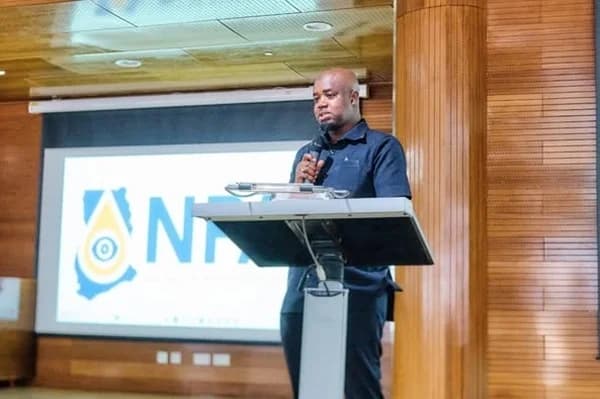
In the energy and petroleum sectors, the National Petroleum Authority (NPA) is advocating for a new legal framework to replace the outdated 2005 Act. NPA CEO Edudzi Tamakloe and the Minister for Energy and Green Transition, Dr. John Abdulai Jinapor, have outlined a new NPA Bill designed to reform pricing structures and enhance energy security. A key feature of the proposal includes a consolidated 'Distribution Fund' and an $80 per metric tonne levy on Liquefied Petroleum Gas (LPG) to support the Cylinder Recirculation Model. These legislative efforts are coupled with urgent technical interventions, including the deployment of new transformers in northern Ghana, to address ongoing power outages and modernize the distribution chain.
The political landscape is also marked by a focus on transparency and regulatory accountability. The Ghana Maritime Authority (GMA) recently refuted allegations from MP Samuel Awuku regarding the MV Sankofa vessel, clarifying that the ship was deregistered in 2024 and currently has no ties to Ghana. Simultaneously, the Public Procurement Authority (PPA) is upgrading its infrastructure cost estimator tool to prevent unrealistic budgeting, while the Land Use and Spatial Planning Authority (LUSPA) has launched compliance monitoring across metropolitan and municipal assemblies. However, these reforms face public scrutiny; traders in Kumasi and Cape Coast have expressed disappointment over stalled or relocated market projects, and the Catchment Area Community Alliance (CACA) is demanding the immediate abrogation of the Bogoso-Prestea mining lease due to operational failures.
Looking forward, the government is moving to stabilize social services and enhance administrative capacity. The Ghana Education Trust Fund (GETFund) has released GH 199.47 million to settle arrears for Free SHS and TVET supplies, easing financial pressures on educational institutions. Additionally, Chief of Staff Julius Debrah is participating in a ministerial leadership program at Harvard University to strengthen public sector delivery. As the new NPA Bill and development authority repeals move toward Parliament, these initiatives represent a multi-faceted effort to recalibrate Ghana’s governance, improve economic efficiency, and restore public trust in national infrastructure and services.
This story touches markets covered on Anansi Intelligence ↗.
More from politics
Continue exploring similar stories


