••
Ghana’s Governance Landscape: Balancing Infrastructure Development, Institutional Accountability, and Social Cohesion
•3 min read•23 sources
Ghana’s political and developmental landscape is currently defined by a dual focus on expanding physical infrastructure and addressing systemic irregularities within state institutions. In the Ketu North Municipality, Chief Executive Martin Amenaki has reported significant progress on road projects, with some reaching 80% completion, a move credited to initiatives by former President John Dramani Mahama. This stands in contrast to the Garu District, where residents are urgently petitioning the government to complete long-overdue road networks essential for agricultural transport. Meanwhile, Ransford Antwi, an independent candidate for Sunyani East, has criticized the relocation of a new airport from Sunyani to Nsoatre, urging the government to prioritize the Bono Regional capital’s development. These contemporary projects often draw comparisons to the vision of Ghana’s first president, Kwame Nkrumah, whose abandoned silos in Ho remain symbolic of the need for governance continuity and long-term accountability in national planning.
Institutional transparency has emerged as a critical concern, particularly following revelations from the National Communications Authority (NCA). Director-General Rev. Edmund Yirenkyi Fianko recently exposed serious anomalies in the Ghana Card database, where identical PINs were found associated with different photographs, suggesting potential fraud. Parallel to these identity concerns, the Minority caucus in Parliament is demanding that the Electricity Company of Ghana (ECG) release a report on the rapid depletion of prepaid units, alleging that citizens were overcharged by approximately 1.5 billion Ghana Cedis in late 2025. This focus on utility and data integrity coincides with international energy crises, such as the total collapse of Cuba’s national electrical grid, which has left over 10 million people in darkness and highlighted the global vulnerability of aging energy infrastructure.
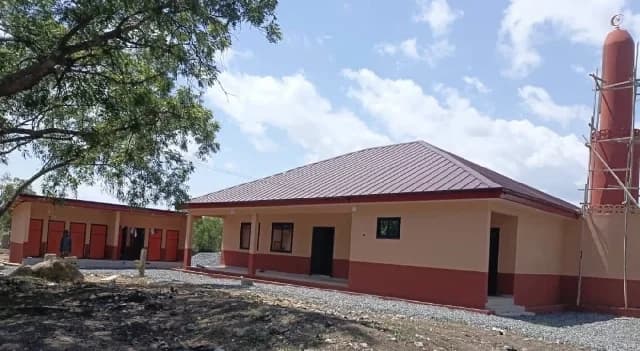
In the health and employment sectors, the government is taking steps to alleviate pressure on public services. Health Minister Kwabena Mintah Akandoh has announced the introduction of 24-hour Out-Patient Department (OPD) services at Korle Bu Teaching Hospital to end the "no bed syndrome" and improve patient flow. To support broader administrative needs, the Ministry of Finance is set to clear the recruitment of 450 new staff for the National Sports Authority (NSA), targeting vacancies in technical and coaching roles. In North Tongu, MP Samuel Okudzeto Ablakwa has announced the commissioning of new schools and mosques, further emphasizing the intersection of political leadership and community-specific infrastructure development.
Social and religious milestones have also served as platforms for leaders to advocate for national discipline and youth empowerment. During Eid-ul-Fitr celebrations in Wa and other regions, leaders including Upper West Regional Minister Charles Luanga and ACP Kofi Sarpong called for a united front against youth drug abuse and reckless behavior. Educational reforms were also a central theme, with calls for better equity and the recruitment of Arabic teachers. This spirit of community development was echoed in Ketu North, where a new apprenticeship program was launched to provide vocational training and equipment to local youth. Collectively, these developments reflect a nation striving to reconcile its historical aspirations with the practical demands of modern governance, infrastructure, and social stability.
This story touches markets covered on Anansi Intelligence ↗.
More from politics
Continue exploring similar stories


