••
Ghana Gold Board Partners with Military for GH¢35 Million Forest Restoration as Experts Urge Climate-Resilient Urban Planning
•3 min read•9 sources
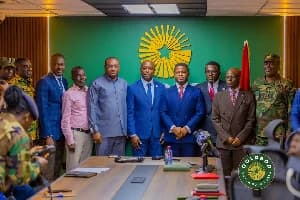
In a major move to address environmental degradation, the Ghana Gold Board (GoldBod) has signed a landmark agreement with the Ghana Armed Forces (GAF) and the Forestry Commission to initiate a national land reclamation project. The initiative, which officially commenced in July 2026, will first target 50 hectares of the Tano Nimiri Forest Reserve, an area severely impacted by illegal mining. GoldBod CEO Sammy Gyamfi announced an investment of approximately GH¢35 million for this first phase, with GH¢27.9 million allocated for civil engineering works and GH¢7.2 million dedicated to afforestation efforts over the next ten years. The project utilizes a dual-model approach, combining military engineering expertise for land stabilization with ecological restoration managed by the Forestry Commission.
This reclamation effort comes at a critical time, as recent surveys indicate that nearly 8,700 hectares of Ghana's forest reserves have been degraded by illegal mining activities. Deputy Minister of Defence, Ernest Brogya Genfi, emphasized that the collaboration represents a necessary shift toward a coordinated national strategy that balances mineral exploitation with ecological integrity. The Ghana Army's Engineers Brigade was specifically selected for its professionalism and ability to execute large-scale civil works in challenging environments. Officials hope this model will serve as a blueprint for future environmental interventions across the country, ensuring that reclaimed lands are not re-exploited and that biodiversity is preserved for future generations.
Parallel to these rural restoration efforts, urban planning experts are sounding the alarm regarding the lack of climate resilience in Ghana's growing cities. Mrs. Gifty Nyarko, a physical planning expert, has urged Metropolitan, Municipal, and District Assemblies (MMDAs) to prioritize spatial planning and the protection of urban greenery to mitigate recurring flooding. She argued that the loss of natural drainage systems and the unregulated construction in wetlands have significantly exacerbated the impact of the rainy season. According to Nyarko, the mere issuance of building permits is insufficient; MMDAs must conduct regular field inspections to ensure compliance with environmental standards and preserve open spaces that act as natural flood defenses.
The urgency of these planning reforms is underscored by the hidden human costs of flooding witnessed in areas like Tema Community Five. Beyond the immediate destruction of property, residents face long-term health hazards from contaminated waters and psychological trauma. There is a growing call for authorities to move beyond temporary relief measures and instead focus on strict enforcement of existing planning regulations and comprehensive post-flood public health interventions. This includes electrical safety screenings and mental health support for victims who lose their livelihoods during seasonal disasters.
Together, these developments highlight a nationwide push for environmental accountability. While the GoldBod and GAF partnership addresses the scars left by illegal mining in Ghana's forests, the call for better urban management seeks to protect citizens from the predictable cycle of urban flooding. Both initiatives suggest that Ghana's path to sustainable development depends on a combination of high-level institutional collaboration and the rigorous local enforcement of environmental laws. As these projects move forward, the focus remains on restoring the nation's ecological balance and building resilience against the growing threats of climate change.
This story touches markets covered on Anansi Intelligence ↗.
Live rates
Ghana gold price →More from africa
Continue exploring similar stories


