••
Ghana Unveils Ambitious Gold-Backed Reserve Policy Amid Opposition Claims of Policy Rebranding
•3 min read•6 sources
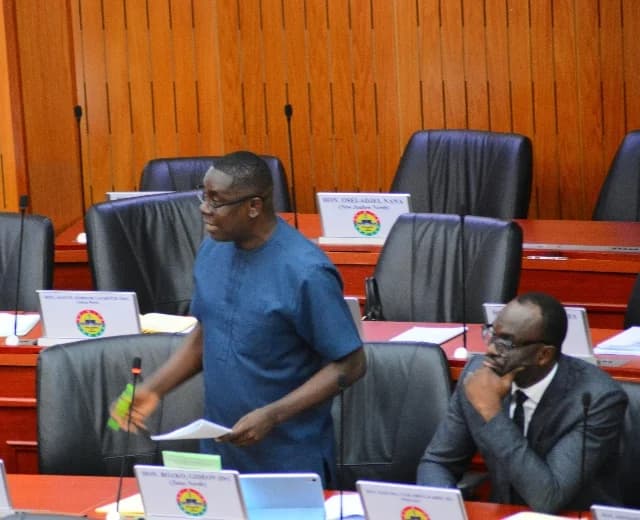
The Government of Ghana has officially introduced the Ghana Accelerated National Reserve Accumulation Policy (GANRAP), a strategic initiative designed to significantly bolster the nation’s foreign exchange reserves. Presented to Parliament by Finance Minister Dr. Cassiel Ato Forson, the policy marks a shift away from traditional external borrowing in favor of leveraging domestic gold resources. The central objective of GANRAP is to achieve 15 months of import cover by the end of 2028, creating a robust financial cushion against future economic shocks and global volatility. This initiative follows Cabinet approval and has been referred by Speaker Alban Bagbin to the Finance Committee for detailed deliberation.
Under the proposed framework, the Ghana Gold Board (Goldbod) will lead a restructured gold acquisition strategy. The policy mandates the Bank of Ghana to acquire at least 20% of gold produced by large-scale mining companies, while also targeting significant purchases from the Artisanal and Small-Scale Mining (ASM) sector. Government projections suggest that by acquiring approximately 3.02 tonnes of gold weekly, the state could add an average of US$9.5 billion annually to its international reserves. Some estimates within the restructuring plan suggest the potential to generate over $20 billion annually, while simultaneously curbing gold smuggling and supporting the growth of local refineries through formalized value chains.
However, the introduction of GANRAP has met with sharp criticism from the opposition, specifically from Dr. Gideon Boako, the Member of Parliament for Tano North and Deputy Ranking Member on the Finance Committee. Dr. Boako has characterized the policy as a mere "rebranding" of the Gold for Reserves (G4R) program originally spearheaded by former Vice President Dr. Mahamudu Bawumia. He questioned the government's motive for presenting GANRAP as a new initiative, pointing out that the current administration had previously criticized the very framework it is now seemingly adopting. Dr. Boako urged the government to be transparent and acknowledge the continuity of the policy rather than seeking to package it as an entirely fresh intervention.
Despite the political friction, the government maintains that the GANRAP framework, supported by the anticipated Ghana Gold Board Act, 2025, is a necessary evolution to ensure long-term economic stability. By centralizing gold acquisition and introducing derivatives to mitigate price volatility, the state aims to reduce the costs associated with reserve management. As the Finance Committee begins its review, the debate is expected to focus on the technical feasibility of the weekly gold purchase targets and the political implications of adopting a strategy that mirrors previous initiatives.
This story touches markets covered on Anansi Intelligence ↗.
Live rates
Ghana gold price →More from politics
Continue exploring similar stories


