••
Ghana’s Galamsey Crisis: Government Revokes Mining Leases Amid Heated Religious and Political Tensions
•3 min read•18 sources
The Ghanaian government has intensified its crackdown on illegal mining, known locally as galamsey, by revoking the mining leases of Adamus Resources Limited for its Akango, Salman, and Nkroful sites. The Minister for Lands and Natural Resources announced the decision following investigations by the Minerals Commission, which uncovered serious violations of the Minerals and Mining Act, 2006. The revocation, executed under Section 100(2) of Act 703, is framed as a matter of public interest. While the government has hinted at potential criminal charges against the company’s management, it has also pledged to implement measures to protect the livelihoods of workers affected by the sudden cessation of operations. This enforcement action coincides with on-the-ground operations by the National Anti-Illegal Mining Operations Secretariat (NAiMOS), which recently dismantled a major illegal mining hub at the Butre River in the Ahanta West District, destroying excavators and water pumps to prevent further environmental degradation.
Parallel to these enforcement efforts, a significant political-religious controversy has emerged, highlighting the sensitivity of the galamsey discourse. Dr. Mary Awusi, CEO of the Ghana Free Zones Authority, faced intense public backlash after criticizing Apostle Eric Nyamekye, Chairman of the Church of Pentecost, for his comments on the environmental impact of illegal mining. The situation necessitated an emotional public apology from the Chief of Staff, Julius Debrah, who described Awusi’s remarks as a “slip of expression” during a thanksgiving service. Apostle Nyamekye has since accepted the apology and publicly forgiven Dr. Awusi, noting that the controversy inadvertently increased national attention on the church’s environmental advocacy. Despite the reconciliation, the incident underscored the friction between state officials and religious leaders who voice concerns over the government’s handling of natural resources.
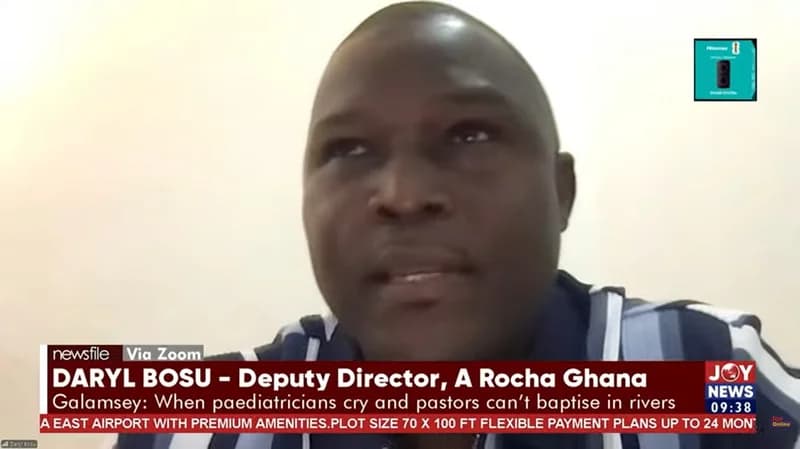
Critics, however, argue that the government’s approach remains inconsistent and lacks structural integrity. Daryl Bosu, Deputy Director of A Rocha Ghana, has voiced concerns that the government is sidelining Act 995, which mandates the prosecution of illegal miners, by opting for the deportation of foreign offenders instead of legal trial. Bosu also criticized the 'Blue Water Guards' initiative, suggesting that the resources allocated to it have not yielded visible improvements in water quality and would be better spent strengthening established institutions like the Forestry Commission and the Police. This sentiment was echoed in a heated televised debate between Paul Adom-Otchere and Hamza Suhuyini, where allegations of involvement in galamsey were traded among journalists, pastors, and politicians, further complicating the narrative of accountability.
As the national debate intensifies, prominent figures are calling for a unified, non-partisan approach to the crisis. Rev. Prof. Joseph Obiri Yeboah Mante, former Moderator of the Presbyterian Church of Ghana, cautioned against the politicization of the galamsey fight, labeling illegal mining an existential threat that transcends party lines. He urged public officials to maintain humility and cautioned that the survival of future generations depends on immediate, cohesive action rather than partisan bickering. With the government’s recent lease revocations and the ongoing pressure from civil society and religious bodies, the coming months will be a critical period for Ghana’s environmental policy and its democratic resilience in the face of resource mismanagement.
This story touches markets covered on Anansi Intelligence ↗.
More from politics
Continue exploring similar stories


