••
Ghana's Sustainability Drive: First Marine Protected Area Established as UNESCO Sites Face Critical Threats
•2 min read•10 sources
Ghana is navigating a complex landscape of environmental progress and preservation crises, highlighted by the historic declaration of the nation’s first Marine Protected Area (MPA). Vice President Professor Jane Naana Opoku-Agyemang officially designated the 700-square-kilometer MPA at Busua, covering 21 communities in the Greater Cape Three Points enclave. This initiative aims to safeguard biodiversity-rich coastal waters and support local economies amidst declining fish stocks. Simultaneously, the Energy Commission has partnered with the GIZ for the 'Mobilize Net-Zero II' initiative, focusing on decarbonizing the transport sector through electric vehicle (EV) infrastructure and green job creation, aligning with Ghana’s commitments under the Paris Agreement.
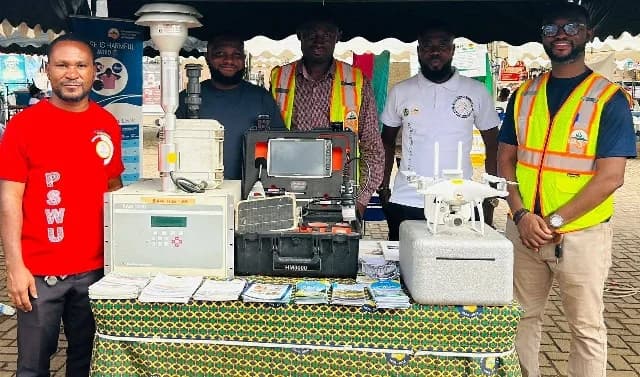
Despite these forward-looking achievements, critical natural assets face immediate danger. Lake Bosomtwe, West Africa’s largest natural lake and a UNESCO biosphere reserve, is currently at risk of losing its international status due to illegal land clearing and the destruction of protected zones. Organizations such as A Rocha Ghana and the Ashanti Regional Minister have called for an immediate cessation of all destructive activities to prevent irreversible ecological and cultural damage. To bolster local environmental governance, the Environmental Protection Authority (EPA) used the Ashanti Expo 2026 to promote decentralization and regulatory enforcement, with regional head Dr. Jackson Adiyiah Nyantakyi emphasizing the need for public education and stronger partnerships to curb such environmental violations.
Infrastructure and public safety also remain key focal points as the nation seeks to modernize its maritime and urban systems. The Ghana Maritime Authority has launched a major hydrographic mapping project to enhance navigational safety and offshore resource management, aiming to develop local expertise and reduce the high costs of foreign-led surveys. However, external safety experts, including Dutch fire officer Johan Tuitert, have warned of significant gaps in Ghana’s water rescue readiness and fire safety in congested urban markets like Makola. These systemic challenges are further complicated by resource shortages in the Department of Parks and Gardens and scheduled utility maintenance by the Electricity Company of Ghana (ECG), which continues to work through transformer faults to ensure long-term grid reliability across the Accra and Ashanti regions.
This story touches markets covered on Anansi Intelligence ↗.
More from africa
Continue exploring similar stories


