••
Ghana’s Economic Resilience Tested as Government Defends Energy Levies Amid Rising Global Oil Prices
•3 min read•42 sources
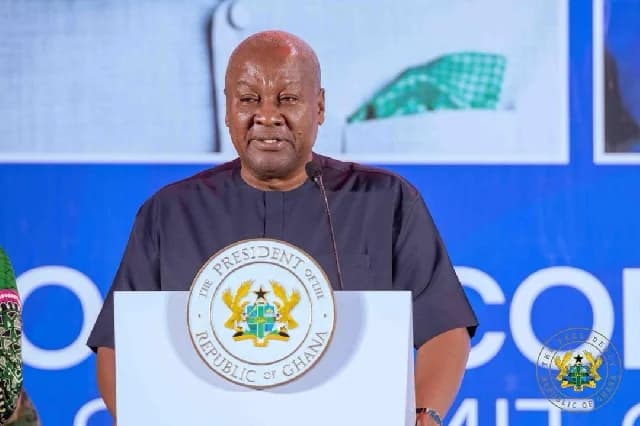
President John Dramani Mahama and the governing National Democratic Congress (NDC) are asserting Ghana’s economic resilience despite escalating geopolitical tensions in the Middle East driving global crude prices upward. While the administration points to a significant drop in inflation—from 23.4% to 3.3%—and improved macroeconomic stability, the opposition and various parliamentary leaders are sounding alarms over the rising cost of living. This economic tug-of-war is currently centered on the controversial 'One Ghana Cedi' fuel levy and the government's strategy of prioritizing gold reserves over agricultural investment, creating a complex landscape for the nation’s recovery efforts in 2026.
The National Petroleum Authority (NPA) has established a "red line" at $120 per barrel, with CEO Godwin Edudzi Tamaklo indicating that high-level presidential intervention may be triggered if global crude prices surpass this threshold. Meanwhile, a heated debate persists over energy taxation. Deputy Ranking Member of the Energy Committee, Collins Adomako-Mensah, has called for the immediate scrapping of the GH¢1 fuel levy, arguing it was based on outdated market assumptions of $60-$70 oil. Conversely, Energy Committee Vice Chair Kofi Arko Nokoe cautioned that removing the levy would not guarantee lower pump prices, as the funds remain vital for managing legacy debts and maintaining power grid stability.
Critiques of the government's broader economic strategy have also emerged from the Minority in Parliament. Minority Leader Alexander Afenyo-Markin warned that the government's heavy reliance on the Domestic Gold Purchase Programme to stabilize the Cedi is unsustainable and threatens long-term food security. He argued that local maize and rice farmers are being neglected in favor of financial instruments, leaving them vulnerable to cheap foreign imports. Samuel Abdulai Jinapor echoed these concerns, urging an emergency Cabinet meeting to address the Middle East crisis’s impact on local inflation, while NPP MP Kennedy Osei Nyarko raised allegations that the government has borrowed GH¢17 billion in 15 months to cover public sector salaries.
On the legislative front, Majority Leader Mahama Ayariga has assured the World Bank Group that the NDC caucus remains committed to holding its own administration accountable to ensure transparency and public trust. President Mahama has also announced a second National Economic Dialogue to engage Organised Labour and civil society in the recovery process. As the government prepares to navigate these external shocks, the immediate challenge remains whether macroeconomic gains, such as a strengthened Cedi and lower inflation, can be translated into tangible relief for Ghanaian households facing high utility tariffs and fuel costs.
This story touches markets covered on Anansi Intelligence ↗.
Related topic
NDC (National Democratic Congress): Latest News →Live rates
Ghana gold price →More from politics
Continue exploring similar stories


