••
Ghana Energy Crisis: Government Navigates Akosombo Fire Recovery Amid Leadership Shake-ups and Calls for Systemic Reform
•3 min read•41 sources
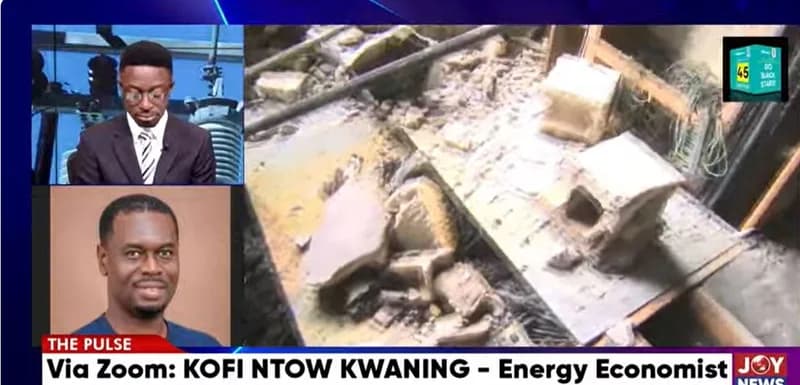
The Minister for Energy and Green Transition, Dr. John Abdulai Jinapor, has announced significant recovery efforts following a devastating fire at the Akosombo Hydroelectric Power Station on April 23, which disrupted up to 1,000 megawatts of generation capacity. This incident triggered widespread power outages across Ghana, particularly affecting the Ashanti, Central, and Tema regions. While the Minister has formally apologized to the public and businesses for the disruptions, he has also confirmed that security agencies are investigating potential criminal aspects, including the possibility of arson. As of late April 2026, emergency technical interventions have successfully restored two generating units at the dam, with engineers working under extreme conditions to bring the remaining units back online by the end of the week.
Addressing the nation during a Government Accountability Series event, Dr. Jinapor clarified that the government will not provide a fixed load-shedding timetable, citing the fluid nature of the restoration process. Instead, the Electricity Company of Ghana (ECG) has been directed to issue frequent, short-interval updates to keep consumers informed of developments. Beyond the immediate crisis, the Ministry has launched a nationwide Transformer Upgrade and Replacement Programme, aiming to replace approximately 2,500 outdated units with more efficient models to stabilize the grid. Additionally, a nationwide audit of all energy installations has been ordered to ensure the safety and readiness of critical infrastructure and to mitigate future operational risks.
The crisis has precipitated a significant administrative shake-up, with the Minister directing GRIDCo CEO, Ing. Mark Awuah Baah, to step aside pending investigations into the Akosombo fire. This move, along with leadership transfers within the Ashanti Region's ECG, has drawn sharp criticism from various quarters. Former Minister Titus Glover labeled the suspension of the GRIDCo CEO a knee-jerk reaction, while the Minority in Parliament accused the government of using the fire incident to mask deeper systemic failures. Furthermore, the Public Utility Workers’ Union (PUWU) has condemned what it describes as the public intimidation and ridicule of ECG staff by political actors, asserting that outages are the result of chronic underinvestment rather than employee sabotage.
Expert voices are increasingly urging the government to look beyond administrative changes toward deep-seated structural reforms. Benjamin Boakye, Executive Director of the Africa Centre for Energy Policy (ACEP), argued that leadership changes alone will not fix the sector's technical and financial woes without addressing institutional weaknesses. Similarly, energy economist Kofi Ntow Kwaning has called for the acceleration of the 1,200 MW gas-fired power projects originally slated for the 2026 budget to ensure long-term energy security by 2030. As the nation waits for full restoration, stakeholders emphasize that the path forward requires a focus on professional accountability, infrastructure modernization, and an end to the politicization of technical institutions.
This story touches markets covered on Anansi Intelligence ↗.
More from politics
Continue exploring similar stories


