••
Ghanaian Educators and Leaders Call for Radical Shift Toward Practical Skills, Integrity, and National Development
•3 min read•6 sources
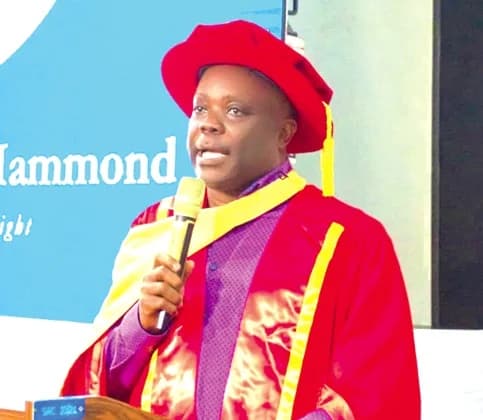
A series of high-profile graduations and professional inductions across Ghana have highlighted an urgent national consensus: the country's educational framework must evolve from a certificate-based system to one rooted in practical skills, ethical integrity, and developmental alignment. Speaking at various forums, government officials and academic leaders emphasized that the traditional focus on academic qualifications is no longer sufficient to meet the demands of a modern economy. Education Minister Haruna Iddrisu urged university vice-chancellors to tailor training to prioritize national development needs, fostering closer cooperation between governing councils and management to ensure institutions remain focused on their core missions.
This call for reform was echoed strongly at the 10th Congregation of Southshore University College, where Professor Felix N. Hammond warned that the rapidly evolving Artificial Intelligence (AI) economy necessitates a move toward practical skills development. According to Prof. Hammond, employers now prioritize a graduate's tangible capabilities and problem-solving skills over mere academic knowledge. Professor Bill Buenar Puplampu added that without significant investment in AI and innovation, Africa risks being left behind in the next wave of industrial advancement. To this end, institutions are being encouraged to help students build practical work portfolios that reflect real-world competence rather than just theoretical understanding.
Leadership and integrity were also central themes at the 15th graduation ceremony of the Kofi Annan International Peacekeeping Training Centre (KAIPTC) and the 7th induction ceremony of the Chartered Institute of Supply Chain Management (CISCM). Air Vice Marshal David Akrong, Commandant of KAIPTC, reminded 162 graduates that integrity is the cornerstone of effective leadership, attributing many of Africa's current challenges to ethical failures. Similarly, CISCM inducted 194 new members, with Director-General of the Ghana Prisons Service, Patience Baffoe-Bonnie, charging supply chain professionals to redefine their roles as essential drivers of national development and institutional sustainability.
Efforts to expand educational access and specialized training are also gaining momentum at the community and primary levels. In the Eastern Region, Municipal and District Chief Imams have formally requested leadership training and the establishment of STEM and TVET schools within Muslim communities to empower youth. Meanwhile, British Columbia College celebrated its 10th anniversary, highlighting the success of its Canadian-based curriculum and the importance of inclusive, character-driven education for younger learners. These diverse initiatives, ranging from new student hostels at Wisconsin International University College to scholarship programs for valedictorians, reflect a multi-tiered approach to improving Ghana's educational landscape.
Ultimately, these developments signal a pivotal shift in Ghana’s educational discourse. The transition toward a more practical, innovation-focused, and ethically grounded system is being framed not just as an academic upgrade, but as a strategic necessity for economic transformation. As the nation prepares to host global events like the IFPSM World Summit, the emphasis remains on producing a new generation of professionals and leaders who are equipped with the character and technical expertise required to thrive in a competitive global environment.
Related topic
Ghana Prisons Service Recruitment: Latest News →

