••
Ghana Intensifies Education Reforms: Bridging the Digital Divide and Aiming for Academic Excellence
•3 min read•6 sources
The Ghana National Education Campaign Coalition (GNECC) has officially launched the 2026 Global Action Week for Education, marking a significant push toward digital equity in the nation's classrooms. At a ceremony held at the Bechem School for the Deaf and Blind, the coalition introduced the theme, 'Addressing the Digital Divide Gap for National Growth through Inclusive Education.' This initiative comes at a critical time, as alarming statistics reveal that 90% of students in Sub-Saharan Africa lack access to household computers and 82% are without reliable internet. The campaign underscores that digital literacy is no longer a luxury but a fundamental right essential for workforce readiness and national development.
To address these disparities, GNECC is advocating for robust infrastructure and inclusive ICT policies, particularly focusing on underserved rural schools, girls, and learners with disabilities. Speakers at the launch emphasized that without targeted investment, the existing technological gap will continue to widen, further marginalizing vulnerable groups. The week-long advocacy efforts aim to align Ghana’s educational framework with Sustainable Development Goal 4 (SDG 4), which calls for inclusive and equitable quality education. By prioritizing digital skills, the coalition hopes to ensure that every Ghanaian child is equipped to thrive in an increasingly digitized global economy.
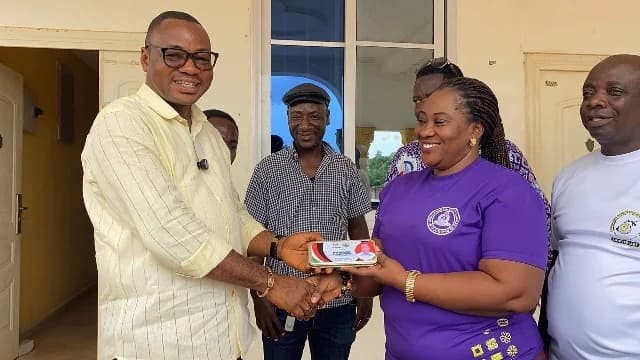
Parallel to these national advocacy efforts, local education directorates are intensifying their focus on academic performance. The Gomoa East District Education Directorate has set an ambitious target of a 90% pass rate for the 2026 Basic Education Certificate Examination (BECE), seeking to improve upon recent averages of 80-84%. With 6,560 candidates expected to sit for the exams across 30 centers, the directorate has engaged the West African Examinations Council (WAEC) to ensure adequate support for candidates with special needs. MP Desmond De-Graft Paitoo has bolstered these efforts by donating mathematical sets to all candidates and pledging rewards for high performers, while strictly cautioning against examination malpractice.
Complementing these digital and academic goals is a renewed focus on the culture of reading as the foundation of leadership. During the commemoration of World Book and Copyright Day in Accra, the Ghana Book Development Council (GBDC) engaged primary schools in Madina under the theme 'Reading to be a leader.' Executive Director Ernesticia Asuinura and representatives from the Ghana Publishers Association highlighted the link between literacy and national progress, calling on parents and teachers to foster early exposure to books. Together, these multifaceted initiatives—ranging from digital infrastructure to exam preparation and literacy—represent a comprehensive strategy to elevate the standard of education across Ghana.
This story touches markets covered on Anansi Intelligence ↗.
More from africa
Continue exploring similar stories


