••
Ghana Government Advances Key Economic and Digital Reforms Amid Growing Scrutiny Over Utilities and Resource Management
•3 min read•18 sources
The Ghanaian government is pushing forward with several major policy initiatives aimed at stabilizing the economy and modernizing national infrastructure, though these moves have been met with significant calls for transparency from both the Minority in Parliament and independent experts. At the forefront of these developments is the approval of the Ghana Accelerated National Reserve Accumulation Policy (GANRAP 2026–2028). The policy aims to bolster the country’s foreign reserves by US$9.5 billion annually through the purchase of approximately 3.02 tonnes of gold weekly from local miners. However, Minority Spokesperson on the Economy, Kojo Oppong Nkrumah, has urged the government to be more candid with citizens, characterizing the program as a rebranding of existing initiatives and raising concerns over recent inconsistencies in the management of gold reserves, including the sale and subsequent repurchase of gold at fluctuating prices.
Simultaneously, the energy sector is facing a crisis of consumer confidence as the Public Utilities Regulatory Commission (PURC) issued a 48-hour ultimatum to the Electricity Company of Ghana (ECG) to resolve widespread complaints regarding the rapid depletion of prepaid units. While the ECG has attributed the accelerated credit loss to the high accuracy of newly installed smart meters, this explanation has been flatly rejected by Collins Adomako-Mensah, Deputy Ranking Member of Parliament’s Energy Committee. He noted that nearly one million meters were installed by late 2024 without issue, and the sudden surge in complaints over the last month suggests a technical or billing anomaly rather than simple usage tracking. The Ministry of Energy has since ordered a full investigation into the matter to restore public trust.
In the realm of natural resources and technology, Minister for Lands and Natural Resources Emmanuel Armah-Kofi Buah has moved to dispel rumors of mismanagement regarding equipment seized from illegal mining sites. He assured Parliament that all confiscated excavators are accounted for and announced the launch of a nationwide digital tracking system to monitor the importation and movement of heavy machinery, aimed at curbing the persistence of galamsey. Complementing this digital push, Communication Minister Samuel Nartey George announced the Cabinet’s approval of Ghana’s first National Artificial Intelligence (AI) Strategy. The strategy, to be launched by President John Dramani Mahama, focuses on building local expertise and ensuring ethical oversight of emerging technologies to drive economic growth.
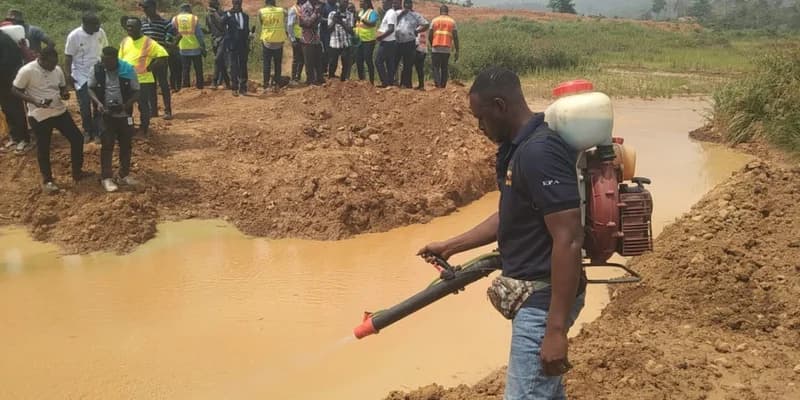
Environmental and health concerns also remain a priority as a recent study by the Institute of Statistical, Social and Economic Research (ISSER) warned that Ghana loses over GHS 6.2 billion annually to sanitation-related diseases, which cause over 177,000 deaths and 31.9 million lost workdays each year. While the Environmental Protection Authority (EPA) recently demonstrated a new Nano Copper technology to purify the Birim River of galamsey-related pollution, the intervention has been met with skepticism. Dr. Expor Anyimah-Ackah of the University of Education, Winneba, cautioned that visual water clarity does not necessarily mean the removal of toxic heavy metals, urging for greater scientific transparency regarding the nanomaterials used.
Finally, the government has provided clarity on social and legal regulations, with Interior Minister Muntaka Mohammed-Mubarak emphasizing that the legalization of cannabis is strictly limited to medicinal and industrial purposes. Despite the new regulatory framework under the Narcotic Control Commission Act of 2023, recreational use remains illegal, and enforcement agencies have been directed to maintain a strict stance against unauthorized cultivation. Collectively, these developments reflect a government attempting to balance ambitious economic targets and technological modernization with the complex realities of utility management and environmental protection.
This story touches markets covered on Anansi Intelligence ↗.
Live rates
Ghana gold price →More from politics
Continue exploring similar stories


