••
Legal Crisis Deepens as High Court Strips Special Prosecutor of Independent Powers
•3 min read•22 sources
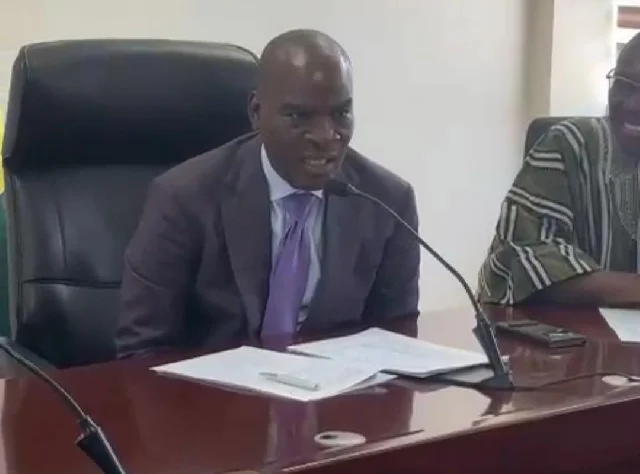
The Ghanaian legal and political landscape has been thrown into turmoil following a landmark High Court ruling that effectively strips the Office of the Special Prosecutor (OSP) of its independent power to initiate criminal prosecutions. On April 15, 2026, the court ruled that ongoing prosecutions led by the OSP are invalid because they lack the necessary specific authorization from the Attorney-General. In response, Deputy Attorney-General Dr. Justice Srem-Sai announced that the Attorney-General’s Department would move to take over all OSP cases to ensure compliance with the court's directive. The ruling stems from a legal challenge brought by Peter Archibald Hyde, who argued that the OSP Act of 2017 cannot override the constitutional authority vested in the Attorney-General. While the OSP has signaled its intent to appeal, the decision has raised fundamental questions about the future of independent anti-corruption efforts in the country. The Office of the Special Prosecutor has rejected the High Court's interpretation, maintaining that its mandate under the 2017 Act remains valid. OSP officials, including Director of Strategy Sammy Darko, argue that only the Supreme Court has the jurisdiction to declare portions of an Act of Parliament unconstitutional. Legal experts like Professor Kwadwo Appiagyei-Atua have noted that the OSP has strong grounds for a challenge, particularly as the ruling impacts the office's core mission. Conversely, former Speaker of Parliament Prof. Aaron Mike Oquaye backed the court's decision, asserting that the 1992 Constitution of Ghana is supreme and that no parliamentary act can supersede the Attorney-General’s ultimate prosecutorial authority. He suggested that rather than creating new independent bodies, the state should focus on strengthening existing constitutional institutions. The ruling has sparked significant backlash from civil society and anti-corruption advocates. Edem Senanu, Chairperson of the African Union Advisory Board Against Corruption, labeled the Attorney-General’s plan to assume control of OSP cases as "farcical" and legally unsound, warning that such moves could erode public trust in anti-corruption initiatives. Similarly, Suame MP John Darko characterized the requirement for case-by-case approval from the Attorney-General as "absurd," arguing it defeats the independent purpose for which the OSP was established. In a more cynical turn, Prof. Henry Kwasi Prempeh of CDD-Ghana advised Special Prosecutor Kissi Agyebeng not to resign but to "relax and collect his pay," reflecting a sense of disillusionment with the systemic hurdles now facing the office. As the matter heads toward a likely showdown at the Supreme Court, the immediate future of the OSP remains uncertain. Civil society leaders have called on President John Dramani Mahama to clarify the government’s stance on the office’s role to prevent a total collapse of public confidence in the fight against graft. The resolution of this case will set a critical precedent for the balance of power between specialized anti-corruption bodies and the traditional executive hierarchy in Ghana. For now, the transition of case files to the Attorney-General signals a major shift in how high-profile corruption cases will be handled in the coming months.
This story touches markets covered on Anansi Intelligence ↗.
More from politics
Continue exploring similar stories


