••
Study Reveals Ghana’s Closed Fishing Season Deepens Socio-Economic Hardship for Coastal Communities
•3 min read•3 sources
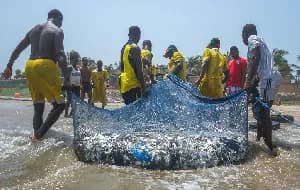
A recent study conducted by researchers from the University of St Andrews has revealed that Ghana’s annual closed fishing season policy is inflicting significant socio-economic hardship on coastal fishing communities. Presented by Dr. Ifesinachi Okafor-Yarwood as part of the Integrating Sacred and Indigenous Practices with Science-based Knowledge (ISIPSK) project, the research indicates that the current implementation of the policy often results in more distress than the environmental benefits it seeks to achieve. The study, which engaged over 200 participants across fishing hubs including the Volta Region, highlights a growing disconnect between state-led conservation efforts and the daily realities of those whose livelihoods depend on the sea. The findings emphasize a range of negative impacts, ranging from severe financial strain to increased social instability within fishing households. Women, who play a pivotal role in the fish value chain as processors and traders, have been identified as particularly vulnerable to the season's restrictions. Without alternative sources of income during the moratorium, many families face heightened stress and food insecurity. The research underscores that while the policy aims to restore dwindling fish stocks, the lack of adequate social safety nets or diversified economic opportunities has turned a conservation measure into a source of community-wide hardship. To address these challenges, the study advocates for a paradigm shift in fisheries management by integrating indigenous knowledge with scientific data. Specifically, participants and researchers suggested shifting the closed season to June rather than July to better align with traditional ecological observations. Furthermore, the report calls for the revival of sacred conservation practices, such as traditional rest days and ancestral rituals, which historically enjoyed high compliance and cultural resonance. By bridging the gap between local traditions and government policy, the study suggests that the Ministry of Fisheries and Aquaculture Development can foster greater community ownership and compliance. Ultimately, the study serves as a critical call to action for policymakers to refine Ghana’s fisheries governance. Beyond adjusting the timing of the closure, there is an urgent need for a unified effort to combat illegal, unreported, and unregulated (IUU) fishing, which further undermines the sustainability of the sector. As Dr. Okafor-Yarwood and community leaders noted during the stakeholders’ forum, ensuring the long-term health of Ghana’s marine resources requires a strategy that is both scientifically sound and socially sustainable. Moving forward, the goal remains to create a management framework that protects the ocean without impoverishing the people who live by its tides.
This story touches markets covered on Anansi Intelligence ↗.
More from africa
Continue exploring similar stories


