••
Ghana Governance Update: CAGD Suspends Thousands of Salaries as Legal and Development Initiatives Take Center Stage
•3 min read•14 sources
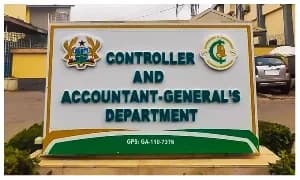
Ghana’s administrative and political landscape has seen a significant push toward accountability and local empowerment this week, marked by a massive cleanup of the public sector payroll and high-profile legal proceedings. In a major move to protect the public purse, the Controller and Accountant-General’s Department (CAGD) announced the suspension of salaries for 2,563 public sector workers effective January 2026. This decision follows a nationwide headcount exercise conducted in 2025 where the affected individuals failed to verify their employment status. According to a statement signed by Cephas N’Dosoo, Head of Public Relations at the CAGD, the action was taken upon the recommendation of the Auditor-General to enhance payroll integrity and eliminate ghost names from the wage system. Affected workers have been directed to contact the Ghana Audit Service for verification to have their salaries reinstated.
Simultaneously, the Tema High Court has granted a GHC 500,000 bail to Prince Edwin Brem, a staff member of the Ghana Ports and Harbours Authority (GPHA), who is embroiled in a complex tugboat theft case. Brem is accused of defrauding by false pretenses and forgery after allegedly misrepresenting himself as a shipping company director to charter the vessel MV Ebenezer, valued at $500,000. Investigations revealed that the tugboat was subsequently moved to Guinea-Bissau and then ordered to The Gambia without authorization. While Brem has pleaded not guilty, the court has ordered him to report to the police weekly until the Case Management Conference resumes on April 8, 2026.
On the legislative front, the Member of Parliament for Wa West, Peter Laanchen Toobu, has launched a vital agricultural intervention titled the 'Water is Wealth' initiative. Aimed at boosting food security and economic independence within his constituency, the project involves the distribution of 35 pumping machines to six farming groups, with a particular focus on empowering women’s cooperatives. By facilitating irrigation at the Siiru Dam Site, the initiative seeks to transition local farmers from subsistence reliance to productive dry-season farming, thereby increasing crop yields and local income.
These developments collectively highlight a dual-track approach to national progress: a stringent focus on institutional accountability within the civil service and judiciary, alongside grassroots-level economic interventions by political leaders. As the CAGD works to finalize its payroll verification and the courts prepare for further hearings in the GPHA case, the success of local projects like those in Wa West underscores the ongoing efforts to balance fiscal discipline with community-driven development across the country.
This story touches markets covered on Anansi Intelligence ↗.
More from politics
Continue exploring similar stories


