••
Ghana Bolsters Regional Stability Through Border Resource Development and Community-Led Peace Advocacy
•2 min read•4 sources
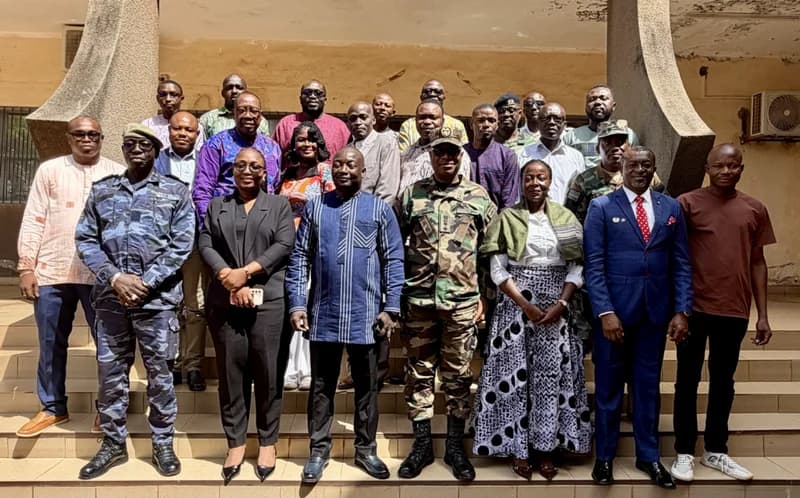
In a concerted effort to enhance regional stability and social cohesion, Ghana has launched a series of strategic initiatives focusing on both resource accessibility and local dispute resolution. The Ghana Boundary Commission (GhBC) has commenced activities to commemorate the 2026 African Border Day, prioritizing humanitarian and developmental aid in border regions. Simultaneously, Supreme Court Justice Henrietta J.A.N. Mensah-Bonsu has issued a call for stronger community-based mechanisms to prevent local grievances from escalating into violent conflict, marking a dual-pronged approach to peacebuilding in West Africa.
As part of the African Border Day build-up, the GhBC commissioned a mechanized borehole in Agatuse, located in the Bawku West District, to address critical water scarcity. This project, funded by the German Federal Foreign Office through the International Organisation for Migration (IOM), is designed to foster cooperation among border communities by securing essential resources. The commission’s outreach extended beyond infrastructure, providing health screenings for over 500 residents and donating 500 exercise books to local students. Officials emphasized that sustainable water access is a cornerstone of peace and security, with plans already in place to commission a similar project in Nakolo on June 17.
Complementing these physical interventions, Justice Mensah-Bonsu emphasized the necessity of structural legal reforms at the grassroots level. Speaking at a peace panel in Accra, the Supreme Court Justice argued that traditional judiciary interventions often come too late to prevent violence. She advocated for the creation of smaller, community-based dispute resolution bodies that provide timely and accessible justice. By establishing these local institutions, the Justice believes citizens can address grievances more effectively, maintaining social cohesion before disputes reach a breaking point.
These combined efforts highlight a growing recognition that long-term peace in Africa requires addressing the root causes of instability, such as resource competition and the lack of accessible legal recourse. By integrating humanitarian aid with localized institutional reform, Ghana aims to create a more resilient framework for peace. The ongoing activities by the Ghana Boundary Commission and the advocacy for community-led justice serve as a blueprint for proactive conflict prevention, ensuring that border and local communities remain stable and collaborative in the face of regional challenges.
This story touches markets covered on Anansi Intelligence ↗.
More from africa
Continue exploring similar stories


