••
Ghana's Political Landscape: Legislative Drives for Electoral Integrity and Economic Stability Amidst Governance Reforms
•3 min read•49 sources
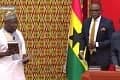
On March 10, 2026, the Parliament of Ghana marked a significant milestone with the swearing-in of Mohammed Baba Jamal Ahmed as the Member of Parliament for Ayawaso East. Following his decisive victory in the March 3 by-election, where he secured 10,884 votes for the National Democratic Congress (NDC) against the New Patriotic Party's 4,009, Ahmed's induction served as a catalyst for broader legislative discussions. Speaker Alban Bagbin utilized the occasion to announce a forthcoming Private Member’s Bill aimed at amending the Criminal and Other Offences Act. This proposed legislation seeks to criminalize electoral misconduct, specifically targeting vote-buying and bribery during party primaries and by-elections, addressing a long-standing legal vacuum that has allowed such practices to persist within internal party contests. Complementing this push for electoral reform, Asante Akim North MP Ohene Kwame Frimpong introduced a separate bill to amend the Political Parties Act of 2000. This initiative aims to establish a transparent campaign financing regime, imposing strict regulations on fundraising, disclosure requirements, and spending limits to ensure fair competition and reduce the influence of unregulated money in politics. Simultaneously, former President John Agyekum Kufuor and constitutional experts have called for deep-seated institutional changes. Kufuor advocated for the reformation of the Council of State into a more transparent house of wisdom and experience, emphasizing that improving public sector remuneration is essential to curbing corruption. These sentiments align with Professor Henry Kwasi Prempeh’s ongoing work with the 2025 Constitution Review Committee, which is exploring structural updates to the 1992 Constitution to enhance democratic efficiency and public sector accountability. While governance reforms take center stage, Ghana’s economic policies—particularly in the extractive sector—are facing intense scrutiny from both lawmakers and policy analysts. Patrick Yaw Boamah, Chairman of the Subsidiary Legislation Committee, has warned that the newly enacted sliding-scale mineral royalty regime could jeopardize nearly one million jobs and deter over $7 billion in planned investments by 2028. Boamah criticized the government for failing to fulfill its promise of reducing the Growth and Sustainability Levy to alleviate the financial burden on mining firms. Policy analyst Dr. Steve Manteaw echoed these concerns, arguing that the 12% royalty rate for smaller operators disproportionately burdens local mining firms while larger multinational companies remain protected by existing stability agreements. Both experts have urged the government to engage in better consultation to avoid a potential investor flight. Beyond legislative and economic debates, the national narrative is further shaped by social integration and party reorganization. Vice President Prof. Naana Jane Opoku-Agyemang recently oversaw a historic ceremony granting Ghanaian citizenship to 155 members of the African Diaspora, reinforcing the nation's commitment to reconciliation and the recognition of the diaspora as Ghana's 17th Region. In the political arena, the Convention People’s Party (CPP) has declared March 6 as a Day of Rebirth to strengthen its internal structures, while the NPP's William Yamoah has urged intensified grassroots engagement. Meanwhile, internal frictions have surfaced within the NDC, as prominent member Anita Desoso criticized the distribution of government appointments. As the nation moves forward, the pressure to pass the Anti-Witchcraft Bill and address environmental ecocide remains high, signaling a period of robust political and social transition for Ghana.
This story touches markets covered on Anansi Intelligence ↗.
Related topic
NDC (National Democratic Congress): Latest News →More from politics
Continue exploring similar stories


