••
Ghana Flood Crisis: 13 Dead in June Downpours as Government and Private Donors Mobilize Relief Funds
•3 min read•7 sources
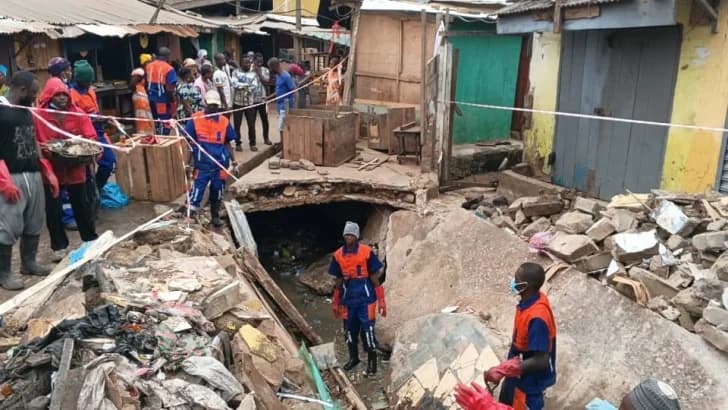
The Greater Accra and Tema regions are grappling with the aftermath of devastating floods in late June 2026, which resulted in at least 13 fatalities and widespread displacement. The heavy rains transformed major roads into rivers and submerged residential buildings, once again exposing the fragility of the nation's urban infrastructure. In response to the disaster, the Ministry of Finance has allocated GH"350 million for emergency relief and flood mitigation efforts. This state intervention is being bolstered by significant private and religious contributions, including a US$300,000 donation of food and essential supplies from The Church of Jesus Christ of Latter-day Saints to the National Disaster Management Organisation (NADMO), and a GH"200,000 cash and goods donation from Softcare FM Manufacturing Limited.
While humanitarian aid provides immediate relief, the recurring nature of these floods has sparked intense criticism of Ghana's urban planning and drainage systems. Environmental engineer Dr. Juliet Ohemeng-Ntiamoah, speaking on JoyNews, argued that current community clean-up efforts are insufficient. She called for a major overhaul of the national drainage infrastructure, advocating for the adoption of a "100-year flood" design standard to withstand the extreme weather patterns driven by climate change. Experts point to rapid urbanization, the paving over of soil with concrete, and the encroachment on waterways as systemic failures that have outpaced the city's waste management and drainage capabilities.
The human cost of these infrastructure failures is most visible in local commerce hubs. At the Tema Community One Market, traders are demanding an immediate reconstruction of facilities after a female trader lost her life when a drain slab collapsed during the floods. Market participants noted that years of unplanned development and deteriorating structures have left them increasingly vulnerable. These local grievances align with broader calls for the government to move away from reactionary measures and implement permanent infrastructure plans that endure beyond four-year election cycles.
Moving forward, the focus remains on the effective distribution of relief items—including food, mattresses, and hygiene products—to the most affected families. However, the prevailing sentiment among urban planners and citizens alike is that without a fundamental shift toward resilience, including the preservation of wetlands and stricter enforcement of building regulations, the next rainy season will likely bring a repeat of this tragedy. The government is under increasing pressure to ensure that the GH"350 million allocation is used not just for temporary fixes, but for the modernization of stormwater management systems essential for the safety of Accra's five million residents.
This story touches markets covered on Anansi Intelligence ↗.
More from africa
Continue exploring similar stories


