••
Ghana Confronts Environmental and Health Crises Amid 69th Independence Anniversary
•3 min read•10 sources
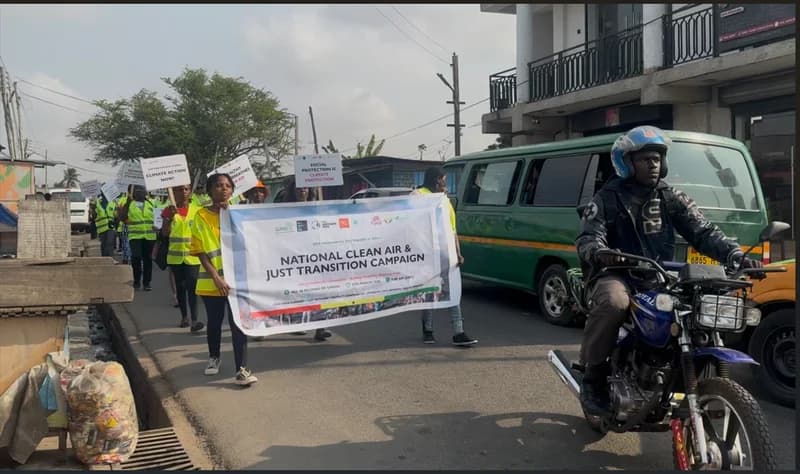
Ghana’s 69th Independence Anniversary has served as a pivotal moment for national reflection on environmental health and sustainability, as the country faces a dual crisis of lethal air pollution and destructive illegal mining. During the celebrations, the Green Africa Youth Organisation (GAYO) and UrbanBetter Cityzens launched a nationwide Clean Air Campaign, bringing to light the staggering reality that air pollution claims over 32,000 lives annually in Ghana. This figure, representing nearly 14% of total annual deaths, highlights a public health emergency where PM2.5 concentrations average more than seven times the World Health Organization’s safety guidelines. Activists and waste pickers marched in Accra, Kumasi, and Takoradi, demanding a "Just Transition" and immediate government action to enforce sanitation laws and reduce industrial emissions.
The urgency for environmental reform is mirrored in the intensified crackdown on illegal mining, or "galamsey," which continues to ravage water bodies and claim lives. The National Anti-Illegal Mining Operations Secretariat (NAIMOS), in partnership with Blue Water Guards, recently conducted large-scale riverine patrols along the Ankobra River, utilizing drone surveillance to identify and destroy over 110 illegal mining machines and floating platforms across the Western Region. Despite these efforts, the human cost of unregulated mining remains high; a recent pit collapse in Assin Subriso, Assin North, resulted in one fatality and three injuries. Local residents have expressed growing frustration over lax safety enforcement and the involvement of foreign nationals in these hazardous operations, calling for more decisive local authority action.
Amidst these challenges, significant strides are being made in agricultural resilience and economic empowerment to provide sustainable alternatives for the youth. In the Wa West District, the Buka community celebrated the handover of a new 85,000-cubic-metre dam and irrigation facility, co-funded by the European Union and German cooperation. This project is designed to transition 30 acres of land from rain-fed to year-round farming, directly addressing food security and rural-urban migration. Simultaneously, the 11th National Rastafari Conference in Kumasi emphasized the role of youth in agribusiness. Through the Presidential Initiatives in Agriculture and Agribusiness (PIAA), the government is expanding opportunities in cocoa, aquaculture, and coconut farming, while also exploring simplified hemp licensing to bolster smallholder farmer incomes.
These developments underscore a critical juncture for Ghana, where environmental preservation is increasingly recognized as a prerequisite for true national independence. From the technological interventions on the Ankobra River to the expansion of irrigation infrastructure in the north, the focus is shifting toward sustainable growth and climate adaptation. Success will depend on the government’s ability to move beyond rhetoric, ensuring the strict implementation of existing policies to protect the nation's aquatic ecosystems, air quality, and the health of its citizens for generations to come.
This story touches markets covered on Anansi Intelligence ↗.
More from africa
Continue exploring similar stories


