••
Ghana Intensifies Climate Action with 30 Million Tree Target and Calls for National Mindset Shift Amidst Growing Environmental Crisis
•3 min read•5 sources
In a major push for environmental restoration, the Ghanaian government has launched the 2026 Tree for Life (T4L) Restoration Initiative, setting an ambitious target to plant 30 million seedlings across the country by the end of the rainy season. Unveiled in Accra to coincide with World Environment Day 2026, this nationwide campaign seeks to strengthen climate resilience and recover degraded landscapes. The initiative emphasizes a diverse range of species, including timber, shade, and fruit trees. The Minister of Lands and Natural Resources stressed that the success of the program depends not only on the initial planting phase but also on rigorous post-planting care, monitoring, and active stakeholder participation across all sectors.
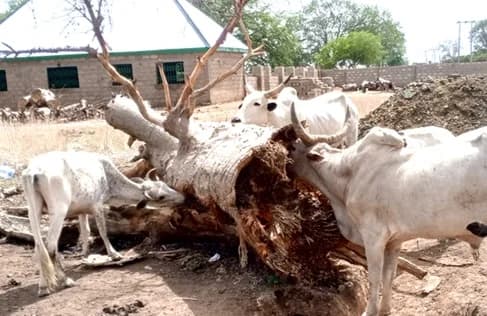
The urgency of these efforts is underscored by a worsening environmental crisis in the Upper East Region, where vanishing grasslands are leaving livestock to starve. Climate change, characterized by erratic rainfall and rising temperatures, has depleted natural pastures, forcing cattle and goats to strip bark from baobab and moringa trees for survival. This degradation, compounded by illegal mining and bushfires, has led to significant livestock losses and increased agricultural costs. Simultaneously, urban centers continue to struggle with perennial flooding, a challenge that Wilfred Neneh Addico of Makers and Partners (MAP) argues cannot be solved by drainage systems alone. He advocates for the preservation of green spaces, noting that natural water management systems have been severely compromised by rapid urbanization.
Local interventions are already underway to support the national restoration goal. In Drobonso, the Environmental Protection Authority (EPA), in partnership with Miro Forestry, organized a community event to plant 500 seedlings aimed at restoring deforested areas. Similarly, Makers and Partners teamed up with Mothercare International School to plant 100 seedlings, fostering environmental responsibility among students. These efforts are part of a broader strategy by the EPA to collaborate with local assemblies in enforcing environmental regulations and ensuring that restoration projects, such as the Ghana Landscape Restoration Project, achieve long-term sustainability through community-led afforestation.
Despite these physical interventions, religious and civic leaders warn that a fundamental shift in the national psyche is required to ensure lasting change. Rev. Dr. Cyril Fayose, General Secretary of the Christian Council of Ghana, has called for a "national mindset change," arguing that human attitudes remain at the heart of ongoing environmental disasters. Speaking at the launch of "The Voice of CCG," he urged Ghanaians to move beyond mere awareness toward active responsibility and ecological justice. By integrating environmental care into cultural values and strictly enforcing existing laws, the Council believes Ghana can successfully transition from reactive disaster management to proactive environmental stewardship.
This story touches markets covered on Anansi Intelligence ↗.
More from africa
Continue exploring similar stories


