••
Government Accelerates National Development Agenda with GH¢12bn Road Infrastructure Investment and Free Primary Healthcare Rollout
•3 min read•32 sources
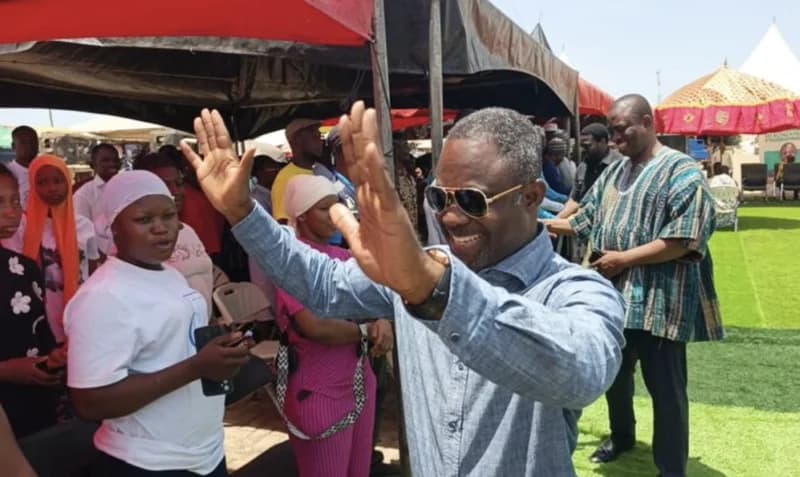
The Government of Ghana has reaffirmed its commitment to massive infrastructure development and social equity, announcing a GH¢12 billion payment toward inherited road projects and the official rollout of the Free Primary Healthcare (FPHC) initiative. Speaking on the progress of national works, Minister for Roads and Highways Kwame Governs Agbodza emphasized that this funding aims to sustain ongoing projects, including the dualization of the Accra-Kumasi Highway and the construction of a new expressway, both slated for completion by 2027. This fiscal commitment is mirrored in the health sector, where Minister Kwabena Mintah Akandoh launched the FPHC in Dambai, targeting 150 underserved districts to eliminate financial barriers to essential medical care for malaria, maternal health, and chronic conditions. To support these health goals, the National Health Insurance Authority (NHIA) has also expanded its footprint with new offices in Apowa to ease access for rural residents.
Parallel to the road and health works, the administration is tackling the housing deficit through a new low-cost housing scheme specifically for public sector workers. President John Dramani Mahama revealed a GH¢3 billion Revolving Fund to provide nurses, teachers, and civil servants with long-term mortgages denominated in local currency to protect buyers from currency fluctuations. Meanwhile, in the energy sector, interventions are being fast-tracked to stabilize power in the Ashanti Region, including transformer upgrades at the Ridge Bulk Supply Point and the establishment of a new command and control center. Leadership in the energy sector has also been solidified with the Public Service Commission confirming Godwin Tameklo as the substantive CEO of the National Petroleum Authority (NPA) to oversee downstream regulation.
Economic decentralization is gaining momentum through the construction of modern markets and the “24-Hour Economy” initiative. In the Kassena-Nankana West District, Regional Minister Akamugri Donatus Atanga broke ground for a new 24-hour market designed to stimulate local trade and create jobs, a move mirrored in Sagnarigu where four modern markets have been developed. During the “Accounting to the People” series, Jaman South Municipal Chief Executive Siata Watara noted a dramatic increase in the District Assembly Common Fund from GH¢1.2 million to GH¢9.75 million, showcasing the impact of decentralization. These efforts are complemented by agricultural interventions, such as the planned rehabilitation of the Tono Dam to boost irrigation farming and a proposed national master plan for egg powder processing to prevent poultry gluts.
Despite these advancements, the government faces criticism and administrative challenges that require ongoing attention. The Government and Hospital Pharmacists Association (GHOSPA) has voiced concerns over the low recruitment of pharmacists, noting that only 250 professionals were recently engaged despite thousands of qualified applicants. On the social front, NPP member Ellen Ama Daaku has publicly opposed a proposed law mandating DNA testing for birth certificates, calling it a disproportionate burden on women and advocating for personal responsibility over legal mandates. Furthermore, as the Ablekuma West Assembly conducts demolitions to combat crime, the Ministry of Tourism has been forced to distance itself from the controversial Karnival Kingdom Festival, underscoring the ongoing tension between rapid urbanization and the preservation of national cultural standards.
This story touches markets covered on Anansi Intelligence ↗.
Related topic
NPP (New Patriotic Party): Latest News →More from politics
Continue exploring similar stories


