Ghana News AI
HomeBriefsAsk GhanaAnalysisTopicsAbout
•
•

Stay Informed

Get AI-curated news briefs from Ghana delivered to your inbox every morning. Free forever, no spam.

Explore

  • Home
  • Briefs
  • About

Categories

  • Politics
  • Business
  • Sports
  • Entertainment
  • Africa

Features

  • Analysis
  • Cedi Rates
  • Dollar to Cedi
  • Ghana Gold Price

Topics

  • All Topics
  • Armed Forces Recruitment
  • Immigration Service Recruitment
  • Fire Service Recruitment
  • Prisons Service Recruitment
  • Customs Recruitment
  • WAEC Results & News
  • Ghana Education Service

Legal

  • Privacy Policy
  • Terms of Service
Ghana News AI© 2026 Ghana News AI. All rights reserved.
Made withfor Ghana
africa

Ghana Champions $100 Billion African Climate Fund and Boosts Domestic Maternal Healthcare

2nd February•2 min read•11 sources
Ghana Champions $100 Billion African Climate Fund and Boosts Domestic Maternal Healthcare
  1. Home
  2. /Africa
  3. /Ghana Champions $100 Billion African Climate Fund and Boosts Domestic Maternal Healthcare

Ghana is asserting a dual leadership role in African development by spearheading a continental call for $100 billion in annual climate finance while simultaneously executing critical improvements to domestic healthcare infrastructure. Speaking at the African Leaders’ Meeting on Climate Adaptation in Nairobi, Minister of State Alhaji Baba Seidu Issifu, representing President John Dramani Mahama, urged African nations to unite in securing predictable funding for climate mitigation. The appeal comes as the continent faces escalating environmental crises, including severe droughts and floods, which threaten to derail long-term economic growth and social stability.

On the international stage, Ghana has criticized recent global climate negotiations, including COP30, for providing inadequate financial commitments and technical frameworks. Issifu emphasized that climate adaptation is a non-negotiable component of development and called for fair financial partnerships rather than traditional debt-based aid. By highlighting the Africa Adaptation Acceleration Programme (AAAP2.0) and the necessity of technology transfer, Ghana is positioning itself as a primary advocate for a resilient African future where youth-led innovation and equitable resource distribution drive industrialization.

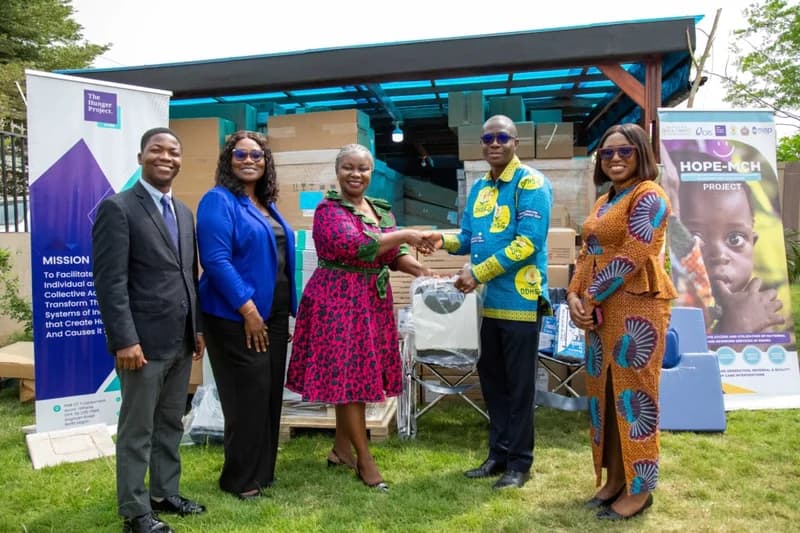
While advocating for global reform, Ghana is also making tangible strides in community-based health through the HOPE-MCH project. The Hunger Project–Ghana (THP–Ghana), with significant funding from The Church of Jesus Christ of Latter-day Saints, recently donated $165,000 worth of essential medical supplies to the Ghana Health Service. This donation includes ultrasound machines, delivery beds, autoclaves, and vaccine refrigerators, specifically targeting 10 underserved health facilities across the Ashanti and Eastern regions. The initiative is part of a long-standing partnership dating back to 1996 that has already impacted over 450 communities.

These combined efforts in climate advocacy and healthcare delivery underscore a comprehensive strategy to reduce systemic vulnerabilities. Leaders at the medical handover ceremony, including THP–Ghana’s Agatha Quayson and representatives from the Ministry of Health, noted that such interventions are vital for reducing maternal and newborn mortality rates. Ultimately, Ghana’s progress highlights a broader African narrative: the necessity of building internal resilience through strategic local investments while demanding accountability and fair treatment from the global financial community.

Our Take

From the Team

Coming Soon

Our team will add key insights, trends, and actionable takeaways to help you stay informed faster.

This story touches markets covered on Anansi Intelligence ↗.

More from africa

Continue exploring similar stories

Black Queens to Launch 2026 WAFCON Campaign Against Cape Verde in Revised Schedule
africa|Yesterday

Black Queens to Launch 2026 WAFCON Campaign Against Cape Verde in Revised Schedule

The Confederation of African Football (CAF) has officially released a revised fixture schedule for the 2026 Women's Africa Cup of Nations (WAFCON), providing essential clarity for Ghana’s national women's football team, the Black Queens. According to the updated timetable, the Black Queens are set to kick off their Group C campaign against Cape Verde on July 29, 2026. This highly anticipated opening match is scheduled to take place at the Moulay Rachid Stadium in Casablanca, Morocco, with the kickoff time confirmed for 17:00 GMT. The announcement comes as part of CAF's broader organizational efforts to ensure the tournament adheres to international standards and provides an optimal environment for the continent's top female athletes. The revision of the schedule is a significant development for the Ghanaian side, as it allows the technical team to fine-tune their preparation strategies and logistical arrangements well in advance of the tournament. Group C is expected to be highly competitive, and the opening game against Cape Verde will be crucial for establishing momentum in the group stages. The Moulay Rachid Stadium, chosen as the venue for this encounter, offers high-quality facilities that reflect the increasing prestige and investment in the WAFCON. For the Black Queens, who have a storied history in African football, this tournament represents a vital opportunity to re-assert their dominance and compete for the ultimate continental trophy after intense qualifying cycles. Beyond the immediate tactical implications, the 2026 WAFCON serves as a major platform for the continued growth and visibility of women's sports across the African continent. The clarity provided by the revised schedule allows the Ghana Football Association (GFA) and other key stakeholders to coordinate fan engagement and media coverage more effectively. As the Black Queens prepare for their journey in Morocco, the focus will remain on rigorous training camps and international friendlies to ensure the squad is at peak performance by July 2026. This tournament not only offers the chance for silverware but also acts as a gateway for potential global competitions, making every match a high-stakes affair for the nation.

High Feed Costs Force 'Nkoko Nkitinkitin' Poultry Beneficiaries to Consume Assets Instead of Selling
africa|Yesterday

High Feed Costs Force 'Nkoko Nkitinkitin' Poultry Beneficiaries to Consume Assets Instead of Selling

A beneficiary of the government's 'Nkoko nkitinkitin' poultry initiative has highlighted the severe economic challenges facing small-scale farmers in Ghana, revealing that high maintenance and feed costs have undermined the primary goal of the program. Enyo, a participant in the project, disclosed that her group was unable to sustain the birds for commercial sale as originally intended. The initiative, which was designed to boost local poultry production and provide a source of income for citizens, faced a significant hurdle when the costs of keeping the animals matured beyond the financial capacity of the keepers. Speaking during a phone-in session on Rainbow Radio 87.5FM's Weekend Morning Show, Enyo shared the practical difficulties encountered on the ground. She explained that although the government provided the chicks, the escalating prices of poultry feed and other necessary inputs made it economically unviable to maintain the business. Consequently, instead of selling the matured chickens to generate revenue and grow their enterprise, Enyo and her group were forced to slaughter the birds for personal consumption to avoid further financial losses. The situation underscores a broader issue within the agricultural sector where rising costs of inputs often outpace the potential profits for small-scale holders. While the state's provision of day-old chicks is a notable intervention, the ongoing operational costs remain a critical barrier to long-term success. The transition from commercial poultry farming to subsistence consumption by beneficiaries like Enyo suggests a need for more comprehensive support structures. For such programs to achieve their intended impact on national food security and economic empowerment, addressing the affordability of feed and establishing reliable market linkages will be essential steps for future agricultural policy.

Lashibi Mobile Money Vendor Foils Armed Robbery, Kills Assailant to Recover GH"140,000
africa|Yesterday

Lashibi Mobile Money Vendor Foils Armed Robbery, Kills Assailant to Recover GH"140,000

In a dramatic act of self-defense, a mobile money vendor in Lashibi, Greater Accra, successfully repelled a violent robbery attempt on July 3, 2026. The confrontation, which escalated into a shootout, resulted in the death of one armed assailant and the recovery of GH"140,000 in stolen funds. The incident underscores the increasing security risks faced by mobile money operators in Ghana, who have become frequent targets for criminal syndicates due to the large volumes of cash they often transport. According to reports from the Ghana Police Service, the encounter began when two armed individuals intercepted the vendor"s vehicle and opened fire. The vendor, who was also armed, immediately returned fire, fatally wounding one of the attackers. In the ensuing chaos, the second suspect fled the scene on foot, leaving behind a bag containing the stolen cash. Upon arrival, police investigators recovered an AK-47 rifle and the full sum of GH"140,000 from the deceased robber, illustrating the dangerous level of firepower employed by the criminals during the ambush. Authorities have since launched an intensive manhunt for the escaped accomplice and are appealing to the public for any information that could lead to an arrest. While the vendor"s quick response prevented a significant financial loss and potentially saved his life, the police continue to urge business owners to adopt secure cash transit measures to avoid such high-stakes confrontations. The recovered funds and the weapon have been taken into custody as evidence while the investigation into the criminal network continues.

At Least 20 Students Drown in Democratic Republic of the Congo After Boat Sinks in Kasai Province
africa|Yesterday

At Least 20 Students Drown in Democratic Republic of the Congo After Boat Sinks in Kasai Province

A tragic maritime accident in the Democratic Republic of the Congo has claimed the lives of at least 20 students who were traveling home after completing their state examinations. The disaster occurred at the confluence of the Sankuru and Kasai rivers in the Kasai province, a central region of the country. According to reports from local authorities and witnesses, the victims were on board a wooden boat when the vessel sank on a Friday, leading to the significant loss of life among the young scholars. Regarding the context of the journey, the incident highlights the perilous conditions often faced by residents in the DRC who rely on river transport as their primary means of movement. State examinations are a critical milestone for students in the country, and the journey back from these testing centers often involves navigating vast distances via water. While the specific cause of the sinking has not yet been detailed, such accidents in the region are frequently attributed to the overloading of wooden vessels, lack of adequate safety gear, and the unpredictable nature of the river currents at major confluences. In the aftermath of this tragedy, as the community in Kasai province mourns the loss of these students, questions regarding transport safety and the protection of students in transit are likely to intensify. River transport remains the backbone of the DRC's internal logistics due to a lack of paved roads, yet it remains largely under-regulated. Local officials are expected to provide further updates as search and recovery efforts continue and as investigations into the structural integrity of the boat and its passenger load are finalized.

All
africa
business
education
entertainment
health
news
politics
sports
technology