••
Fitch Solutions Forecasts Growth Moderation and Rising Inflation for Ghana's Economy Through 2027
•3 min read•4 sources
Ghana’s economic landscape is projected to face a period of moderating growth and intensifying inflationary pressures as it moves toward 2027. According to a new forecast from Fitch Solutions, the nation’s economic growth is expected to slow to 4.7% in 2027, down from the 5.7% projected for 2026. This deceleration is attributed to a combination of stagnant oil and cocoa production and significantly weaker agricultural output. While the economy demonstrated robust performance in early 2026—growing by 6.4% year-on-year in the first quarter—heavy fiscal burdens from the Domestic Debt Exchange Programme (DDEP) and increasing Eurobond obligations are expected to divert government funds away from consumption, cooling the growth trajectory.
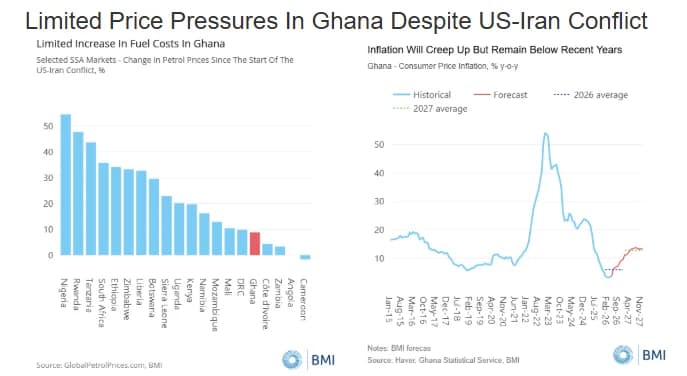
Inflationary dynamics are also shifting, with Fitch Solutions predicting a sharp rise in the average inflation rate from 6.0% in 2026 to 12.8% in 2027. This projected spike is linked to external monetary pressures, specifically tighter policy from the US Federal Reserve, which is expected to weaken global gold prices and strain the cedi. Although a strong cedi helped keep inflation relatively low in early 2026, those gains are expected to diminish. Furthermore, the El Niño weather phenomenon is flagged as a major risk factor, likely to suppress crop yields and drive up food costs. Recent data from the Ghana Statistical Service already indicates a slight upward trend, with inflation rising to 3.7% in May 2026 from 3.4% the previous month.
Sector-specific costs are already reflecting these broader economic pressures. In the construction industry, inflation edged higher to 2.7% in May 2026, driven primarily by the rising cost of specialized building inputs and equipment. While declines in cement and steel prices have provided some relief, they have not been enough to fully offset the costs of technical machinery. In the agricultural sector, the outlook is particularly strained for specific commodities; experts have warned that ginger prices are likely to remain high for at least the next two years due to a severe domestic shortfall. These localized price hikes for essential building materials and food items are compounding the budget pressures on both households and commercial enterprises nationwide.
Despite these challenges, the economic outlook remains a balance of risks and resilience. Fitch Solutions notes that while US monetary policy and global energy market disruptions pose downward threats to exports and gold prices, domestic demand in Ghana remains surprisingly strong. Resilient private investment and household spending could provide a necessary cushion against the projected fiscal tightening. However, as the government navigates high-interest debt repayments and environmental impacts on agriculture, the coming years will require strategic management to maintain the momentum seen in the early parts of 2026.
This story touches markets covered on Anansi Intelligence ↗.
Live rates
Bank of Ghana policy rate →More from business
Continue exploring similar stories


