••
FIFA to Extend 2026 World Cup Final Half-Time for Super Bowl-Style Show Featuring Coldplay and Madonna
•2 min read•10 sources
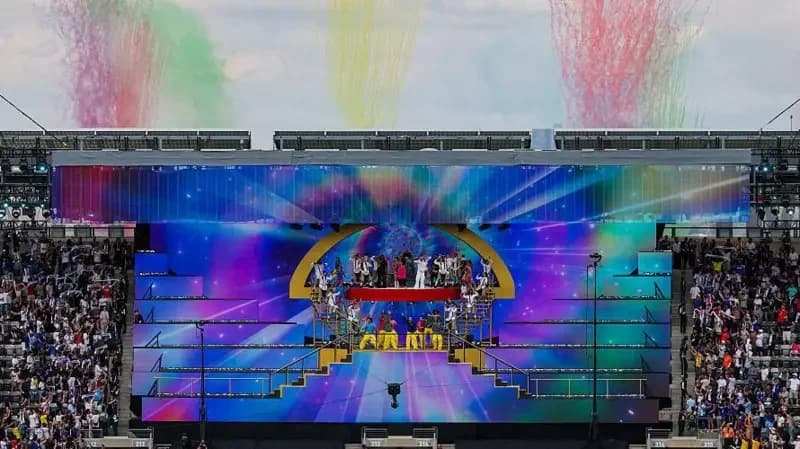
FIFA is set to break long-standing football traditions by proposing an extended half-time interval of 20 to 25 minutes for the 2026 World Cup final. This planned deviation from the International Football Association Board (IFAB) standard 15-minute break is intended to accommodate a high-profile, on-pitch musical performance at the New York New Jersey Stadium (MetLife Stadium) on July 19, 2026. The move signals a major shift in FIFA’s strategy to enhance the tournament’s global entertainment profile, drawing direct comparisons to the NFL’s Super Bowl halftime show.
The performance is expected to be a star-studded affair curated by Coldplay’s Chris Martin. Sources indicate a lineup that could feature global icons such as Madonna, Shakira, BTS, Justin Bieber, and Burna Boy. Beyond the entertainment value, the 11-minute show aims to serve a philanthropic purpose, with plans to raise $100 million for the FIFA Global Citizen Education Fund to support children's education worldwide. To execute this, FIFA is considering either a single extended break or a sequence where the standard 15-minute player rest is immediately followed by the concert.
However, the proposal has encountered significant pushback from critics who argue that the change represents an unnecessary "Americanization" of the sport. The primary concern among football purists and medical experts is the impact on the game’s integrity and player performance. Extending the break by an additional 10 minutes could disrupt the physical rhythm of the athletes, potentially leading to increased injury risks or a drop in intensity during the second half. While FIFA has pointed to recent precedents, such as a 24-minute break during the Club World Cup final, many believe the World Cup final should remain strictly governed by traditional athletic standards.
As the administrative debate continues, the competitive landscape for the tournament is already taking shape. Spain has established itself as a formidable contender, having recently secured a spot in the final stages of the current cycle by defeating France 2-0. They are poised to face the winner of a highly anticipated matchup between England and Argentina. This backdrop of high-stakes competition, combined with FIFA’s ambitious entertainment plans, sets the stage for a 2026 final that aims to be as much a cultural phenomenon as it is a sporting event.
This story touches markets covered on Anansi Intelligence ↗.
More from sports
Continue exploring similar stories


