••
Ministry of Fisheries Partners with Norway and R&B Farms to Transform Shama into a Hub for Sustainable Aquaculture and Marine Infrastructure
•2 min read•7 sources
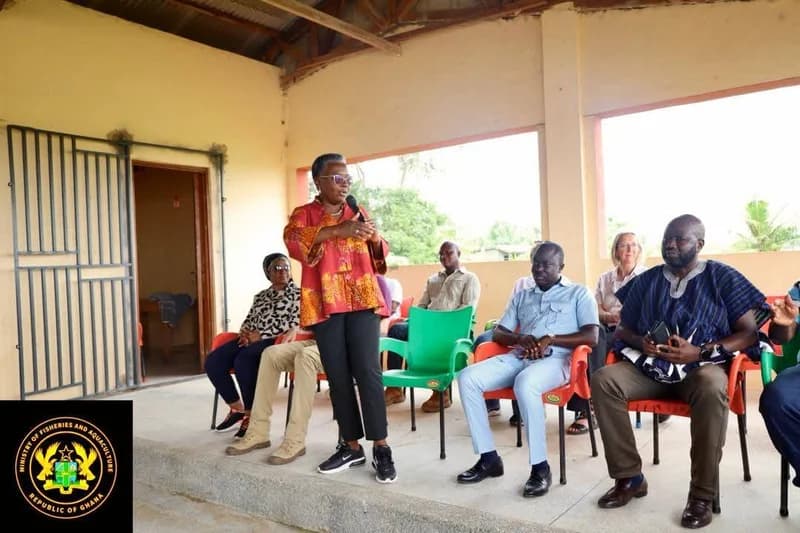
The Ministry of Fisheries and Aquaculture has intensified its efforts to revolutionize Ghana’s fishing industry through a series of strategic initiatives in the Shama District of the Western Region. Led by Minister Emelia Arthur, the government has launched the innovative Komfueku–Shama Aquaculture Project while simultaneously strengthening bilateral ties with Norway to develop a modern fishing harbor and a marine plastic recycling program. These developments form part of a broader Blue Economy strategy designed to enhance domestic fish production, create sustainable jobs for youth and women, and address environmental degradation through creative land use.
A central pillar of this transformation is the Komfueku–Shama Aquaculture Project, a public-private partnership with R&B Farms. This initiative focuses on the creative reclamation of land by converting abandoned clay and quarry pits into productive fish farming sites. By repurposing these underutilized and often hazardous environmental sites, the project aims to significantly increase the local fish supply and alleviate pressure on dwindling marine stocks. Local authorities have lauded the project as a model for environmental stewardship, noting its potential to provide stable livelihoods and bolster food security within the district.
In a parallel development, Ghana and Norway have solidified their fisheries alliance following a ministerial visit to the Apo fishing community. Minister Emelia Arthur and Norwegian Ambassador John Mikal Kvistad announced plans for a modern fishing harbor in Shama to improve fish landing and handling processes, alongside a plastic recycling initiative aimed at mitigating marine pollution. This partnership is anchored in the "Oceans for Development" and "Fish for Development" frameworks, which prioritize responsible ocean governance and the economic well-being of coastal populations. Ambassador Kvistad reaffirmed Norway’s commitment to supporting Ghana’s marine sustainability goals through technical cooperation and infrastructure investment.
These integrated projects represent a significant shift toward sustainable resource management and economic diversification in Ghana’s fisheries sector. By combining high-tech infrastructure development with community-based aquaculture and environmental restoration, the government seeks to create a resilient economic engine in the Western Region. As these initiatives move into their implementation phases, they are expected to serve as a blueprint for national efforts to balance industrial growth with ecological preservation, ensuring that the Blue Economy provides long-term benefits for all Ghanaians.
This story touches markets covered on Anansi Intelligence ↗.
More from africa
Continue exploring similar stories


