••
Elon Musk’s SpaceX Starship Successfully Completes Indian Ocean Splashdown Following First Post-IPO Mission
•2 min read•1 source
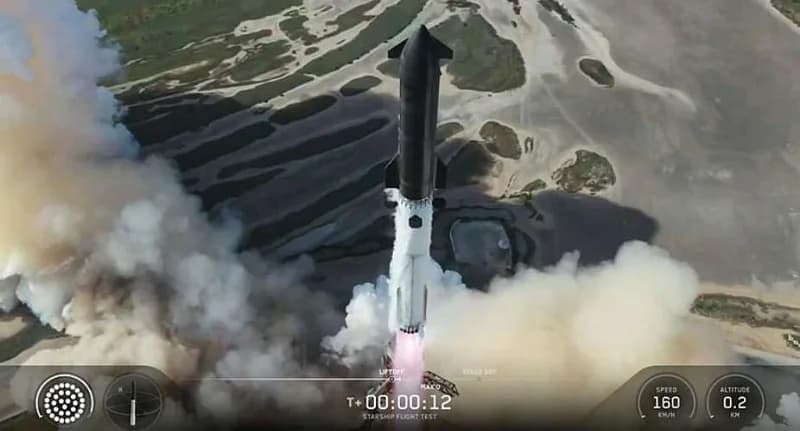
SpaceX has achieved a significant milestone in its aerospace development program after its massive Starship rocket successfully splashed down in the Indian Ocean on Friday. This flight marked the first major test for the 122-metre-tall vehicle since SpaceX went public in June, signaling a new era for the company as a publicly traded entity. Following the mission, company head Elon Musk confirmed that the spacecraft remained intact throughout the process and continued to transmit vital data back to mission control, providing a wealth of information for future iterations of the vessel.
The mission was not merely a demonstration of flight capabilities but also served a practical purpose by successfully deploying 20 Starlink V3 satellites into orbit. During the flight, SpaceX engineers monitored various critical upgrades, with a particular focus on the performance of the heat shield during atmospheric reentry. Live footage from the spacecraft captured the intensity of the descent, generating significant excitement among SpaceX staff and enthusiasts globally. This data-driven approach is central to the company’s iterative design philosophy, where each flight builds upon the technical lessons of the previous one.
While the test was largely classified as a success, mission controllers noted that the final landing burn was harder than hoped. Despite this forceful impact, the fact that the Starship survived the harrowing journey through the atmosphere and reached its designated splashdown zone is seen as a major win for the program. As SpaceX continues to refine its landing procedures and heat shield technology, this successful mission reinforces the company's trajectory toward developing a fully reusable transport system capable of carrying both crew and cargo to Earth orbit, the Moon, and potentially Mars.
This story touches markets covered on Anansi Intelligence ↗.
More from technology
Continue exploring similar stories


