••
Advancing West African Growth: Major Trade Deals, Regional Integration, and Infrastructure Reforms Take Center Stage
•3 min read•7 sources
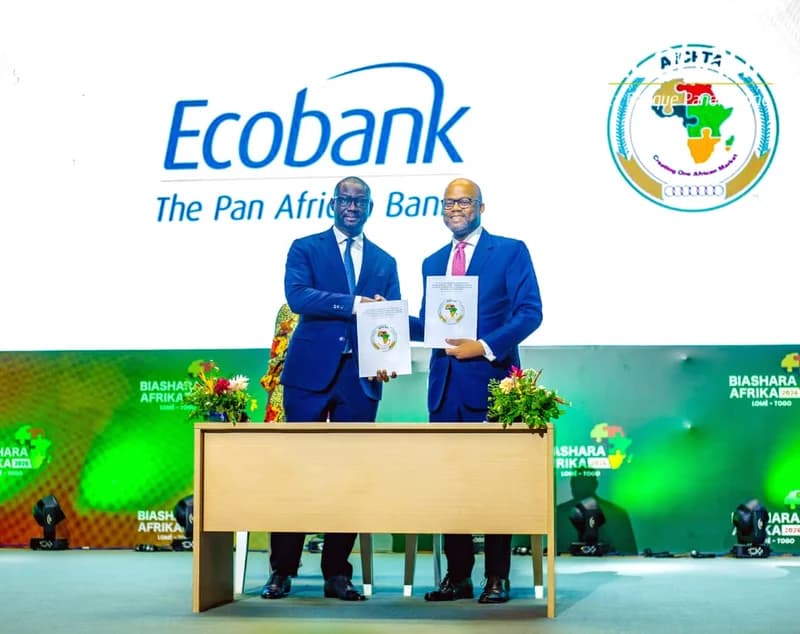
In a significant move to bolster economic growth across the continent, the Ecobank Group and the African Continental Free Trade Area (AfCFTA) Secretariat have signed a Memorandum of Understanding to unlock $3 billion in trade finance. This landmark agreement is specifically designed to support small and medium-sized enterprises (SMEs), women-led businesses, and young entrepreneurs who have historically been excluded from formal trade finance. H.E. Wamkele Mene, Secretary-General of the AfCFTA, emphasized that affordable finance is the key to unlocking the potential of a single African market of 1.3 billion people. This financial injection is expected to accelerate the African Union’s Agenda 2063 objectives by fostering greater participation in intra-African trade.
Parallel to these economic strides, Ghana is deepening its regional integration through enhanced cross-border governance and energy cooperation. During a recent consultation with representatives from C$te d’Ivoire, Burkina Faso, and Mali, Ghana’s Minister for Lands and Natural Resources, Emmanuel Armah-Kofi Buah, reaffirmed the nation's commitment to mutual trust and coordinated management to address security threats and environmental degradation. This spirit of cooperation extends to the energy sector, where the Volta River Authority (VRA) Academy in Akuse has launched a two-week regional training workshop on clean mini-grids. Organized with the ECOWAS Centre for Renewable Energy and Energy Efficiency (ECREEE), the initiative aims to equip participants from Ghana and The Gambia with the technical skills necessary to provide reliable energy to rural communities where conventional grid extension is not feasible.
On the domestic front, the National Identification Authority (NIA) is celebrating 20 years of enhancing Ghana’s identity management framework. The Margins ID Group commended the NIA for creating a trusted digital identity ecosystem that has become a foundation for national development and public service delivery. Simultaneously, the Ghana National Association of Driving Schools (GNADS) is advocating for stricter road safety regulations to complement this digital progress. General Secretary Ali Wahab and other stakeholders are pushing for mandatory driver training and refresher courses under Legislative Instrument 2180 to reduce rising road fatalities, a move supported by National Chief Imam Sheikh Dr. Osman Nuhu Sharubutu.
Despite these advancements, challenges in infrastructure and public safety persist. While domestic tourism in Ghana has seen a notable 19% increase in visitation to sites like Kakum National Park and the Kwame Nkrumah Memorial Park, community leaders are raising alarms over stalled infrastructure projects. In Kasoa, residents of Jei River have reported that an abandoned Agenda 111 hospital site, currently only 41% complete, has become a haven for criminal activity and squatters. As the nation looks to sustain its economic momentum and tourism boom, the completion of such vital healthcare facilities and the continued enforcement of safety regulations remain critical priorities for local and regional stability.
This story touches markets covered on Anansi Intelligence ↗.
More from africa
Continue exploring similar stories


