••
Ebola Crisis in Central Africa Triggers Violent Unrest and Global Alarm Amid Funding Shortages
•3 min read•16 sources
Health officials in the Democratic Republic of the Congo (DRC) and neighboring Uganda are struggling to contain a lethal outbreak of the rare Bundibugyo strain of Ebola. With death tolls rising to approximately 160 and suspected cases exceeding 670, the World Health Organization (WHO) has designated the situation a Public Health Emergency of International Concern. Unlike the more common Zaire strain, the Bundibugyo variant currently lacks an approved vaccine or specific treatment, complicating containment efforts in densely populated and conflict-ridden regions. DRC Health Minister Samuel Roger Kamba has issued an urgent appeal for international aid, noting that a significant decline in global support is hampering frontline protection and essential scientific research.
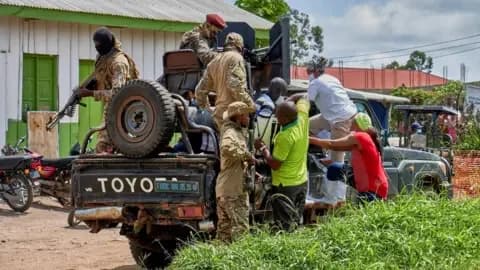
The health crisis has been further exacerbated by deep-seated community mistrust and misinformation, which recently culminated in violent unrest. In eastern DRC, an angry crowd set fire to isolation tents at Rwampara General Hospital after authorities prevented a family from claiming the body of a local footballer, Eli Munongo Wangu, for traditional burial. While medical experts suspected Ebola, relatives insisted the death was caused by typhoid fever. The ensuing chaos required police to fire warning shots and place healthcare workers under military protection. This resistance underscores a persistent challenge for responders: many local citizens view the virus as a fabrication, leading to the rejection of safe burial practices crucial for stopping the virus's spread.
The outbreak's reach is also impacting international relations and regional stability. The India-Africa Forum Summit, originally scheduled for New Delhi, was indefinitely postponed to ensure the full participation of African leaders who are currently managing the health emergency. Furthermore, the spread of the virus into territories controlled by the M23 rebel group in South Kivu province has raised alarms about the feasibility of medical intervention in active conflict zones. In response to detected cases, Uganda has temporarily suspended cross-border public transport, while organizations like the Africa Feature Network (AFN) advocate for community-led actions and heightened surveillance across Central Africa.
In West Africa, Ghana remains on high alert despite having no confirmed or suspected cases of Ebola. Health Minister Kwabena Mintah Akandoh and the Ministry of Health have reassured the public that surveillance at borders has been intensified and hygiene campaigns are being promoted to prevent any potential spread. Amidst these regional challenges, African medical expertise continues to gain global recognition. Professor Lydia Mosi of the University of Ghana recently received a lifetime achievement award from the Anesvad Foundation for her pioneering research on Buruli ulcer, while researchers like Professor Vincent Boima continue to advocate for advanced treatments like kidney transplantation to improve health outcomes across the continent.
This story touches markets covered on Anansi Intelligence ↗.
More from africa
Continue exploring similar stories


