••
DVLA Deploys Advanced Clone Detection Technology to Combat Vehicle Registration Fraud
•2 min read•1 source
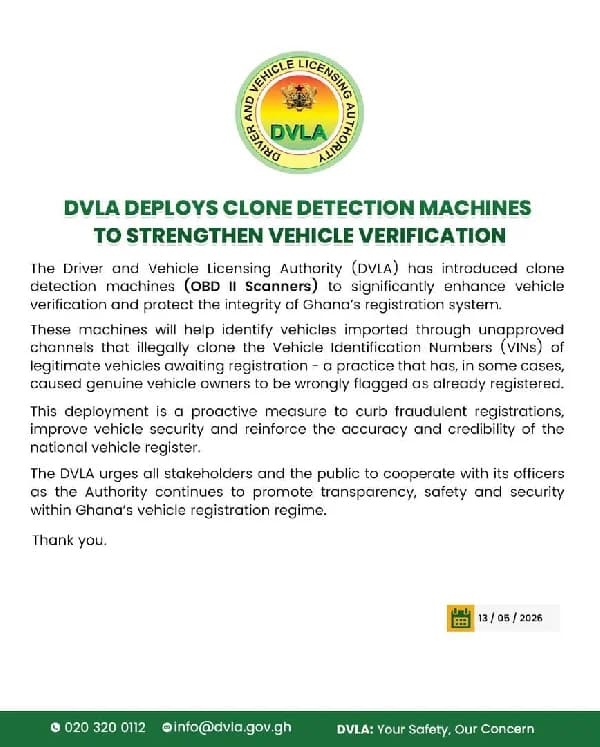
The Driver and Vehicle Licensing Authority (DVLA) has officially introduced state-of-the-art clone detection machines, specifically On-Board Diagnostic (OBD II) scanners, to bolster the integrity of Ghana's national vehicle registration system. This technological intervention is designed to provide a more rigorous verification process for all vehicles, ensuring that the records held by the authority match the physical and electronic data of the vehicles being registered. By integrating these scanners into their standard operating procedures, the DVLA aims to eliminate the loopholes that have previously allowed for the fraudulent registration of vehicles with cloned or tampered identities.
The implementation of this technology is primarily aimed at detecting vehicles imported through unauthorized channels and preventing the use of cloned Vehicle Identification Numbers (VINs). Cloned VINs occur when a legitimate vehicle's identity is illegally assigned to another car, often one that has been stolen or smuggled into the country. These OBD II scanners interface directly with a vehicle's internal computer system to verify its authentic identity, making it significantly harder for fraudsters to bypass the system. This move is expected to drastically reduce registration fraud, which has long been a challenge for both the licensing authority and law enforcement agencies across the country.
Beyond the immediate goal of fraud prevention, the DVLA emphasizes that this initiative is a critical step toward improving overall road safety and vehicle security in Ghana. By ensuring that every vehicle on the road is accurately identified and properly documented, the authority can better track vehicle histories and ensure that only roadworthy and legal vehicles are in operation. This enhanced transparency is expected to build greater public confidence in the vehicle licensing regime and protect unsuspecting buyers from purchasing vehicles with falsified documentation.
As the rollout proceeds nationwide, the DVLA has called for full cooperation from vehicle owners, importers, and other industry players. The transition to this more secure verification method represents a significant modernization of Ghana's transport sector, aligning it with international best practices for vehicle identification and data management. Moving forward, the authority intends to maintain a strict adherence to these new protocols, ensuring that the integrity of the national vehicle database remains uncompromised while simplifying the verification process for law-abiding citizens.
This story touches markets covered on Anansi Intelligence ↗.
More from technology
Continue exploring similar stories


