••
Humanitarian Crises and Tragic Accidents Claim Scores of Lives Across DRC, Ethiopia, and Libya
•3 min read•3 sources
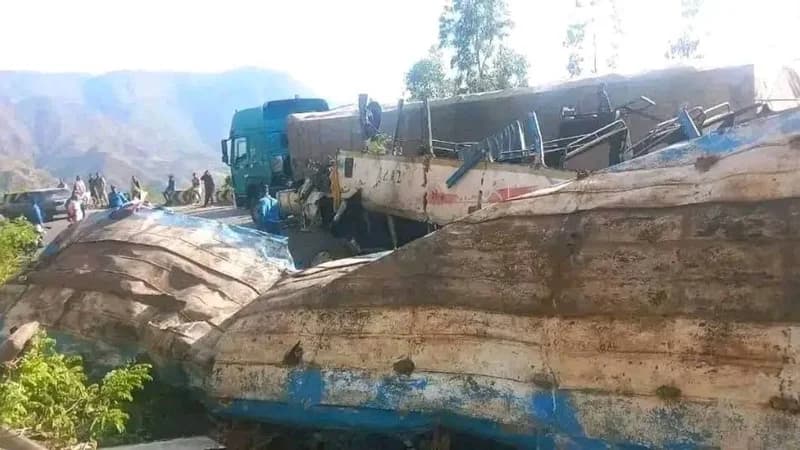
Africa is currently grappling with a series of devastating humanitarian and safety crises, highlighting the precarious conditions faced by millions across the continent. In the Democratic Republic of Congo (DRC), civilians find themselves trapped in a double-edged crisis of a deadly Ebola outbreak and persistent militia violence, particularly in the eastern regions. Simultaneously, a horrific bus accident in northern Ethiopia has claimed dozens of lives, while in Libya, the grim discovery of migrant bodies along the coast serves as a stark reminder of the perils faced by those fleeing instability and poverty. These events collectively underscore the urgent need for systemic reforms in security, infrastructure, and humanitarian aid. In the eastern DRC's Ituri province, the Plaine Savo camp has become a flashpoint for human suffering. Home to over 70,000 displaced individuals, the camp is besieged by fear as residents are targeted by militias while attempting to secure basic necessities like water and firewood. The health situation is equally dire; Doctors Without Borders reports treating approximately 60 cases of sexual violence every week, a symptom of the lawlessness pervading the area. The ongoing conflict has severely hampered efforts to contain Ebola, with health services strained to the breaking point and a deep-seated mistrust of the Congolese army further complicating international humanitarian interventions. Aid organizations now warn of an imminent disaster if the outbreak spreads further among these vulnerable populations. Further north, Ethiopia is mourning the loss of at least 31 people following a tragic road accident in the conflict-stifled Amhara region. An overcrowded bus traveling from Dessie to the capital, Addis Ababa, veered off a hazardous mountain road and plunged into a deep ravine, leaving 33 others injured. Local authorities confirmed that the bus was overloaded, and the lack of adequate emergency infrastructure significantly delayed medical response, likely contributing to the high death toll. This tragedy highlights the broader challenges of public transit safety and enforcement in sub-Saharan Africa, where road fatalities remain among the highest globally due to poor infrastructure and regional instability. The regional instability driving displacement is also evident in Libya, where medics recently recovered the bodies of at least 15 migrants washed ashore in Khumas, east of Tripoli. Since the 2011 uprising, Libya has served as a perilous transit hub for sub-Saharan Africans attempting the dangerous journey across the desert and the Mediterranean Sea to reach Europe. These collective tragedies—from the disease-threatened camps of the DRC to the treacherous roads of Ethiopia and the shores of North Africa—highlight the critical intersection of conflict, poverty, and state fragility. Addressing these issues will require coordinated international efforts to stabilize volatile regions and invest in life-saving infrastructure.
This story touches markets covered on Anansi Intelligence ↗.
More from africa
Continue exploring similar stories


