••
England’s Djed Spence Sparks Controversy After Refusing Handshake with Ghana’s Thomas Partey in Boston
•2 min read•5 sources
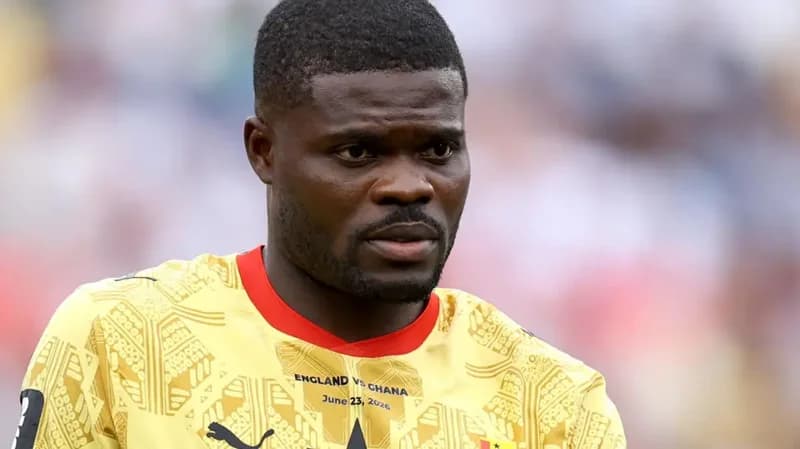
During a high-profile World Cup encounter in Boston, England defender Djed Spence ignited a significant social media storm by appearing to deliberately avoid shaking hands with Ghanaian midfielder Thomas Partey. Footage from the pre-match ceremony captured Spence moving past the Arsenal star, making him the only player in the England squad to skip the gesture. The incident occurred as Partey made his first appearance of the tournament, having missed Ghana’s opening fixture. His presence on the pitch was already met with vocal hostility from sections of the crowd, who booed the midfielder throughout the proceedings.
The snub is widely believed to be linked to the ongoing legal challenges facing Partey. The Ghanaian international is currently facing multiple legal charges, including seven counts of rape, with a formal trial scheduled for next year. These allegations have cast a long shadow over his participation in the World Cup, leading to intense scrutiny of both his inclusion in the squad and the response of opposing players. Reports indicate that the Football Association (FA) did not provide specific instructions or protocols to the England players regarding pre-match handshakes with Partey prior to the match, leaving individuals to decide their own course of action.
The gesture has polarized fans and pundits, prompting a heated debate over sportsmanship versus personal principles. In an open letter addressed to Spence, Samuel Attah-Mensah offered a nuanced perspective, urging the young defender to consider the principle of the presumption of innocence. Attah-Mensah highlighted that while the allegations are serious, the rights of the accused must be respected within the framework of justice. He emphasized that such public gestures, while perhaps intended as a moral stance, can have unintended consequences for the spirit of the game and the values of mutual respect that football aims to promote.
As the tournament continues, the incident serves as a stark reminder of the complex intersection between professional sports and global legal matters. While the match in Boston was intended to focus on the competitive rivalry between England and Ghana, the handshake snub has shifted the conversation toward the accountability of athletes and the role of governing bodies in managing sensitive situations. For now, Thomas Partey remains a central figure of both sporting and legal interest, while Spence’s actions continue to be cited as a significant moment of individual protest on the world stage.
This story touches markets covered on Anansi Intelligence ↗.
More from sports
Continue exploring similar stories


