••
Dr. Mohamed Ibn Chambas and Transparency International Raise Alarm Over Conflict and Systemic Defense Corruption in Africa
•2 min read•2 sources
The African continent is currently grappling with a dual security crisis as 16 nations face active armed conflict while systemic corruption risks threaten the integrity of defense sectors across the region. Dr. Mohamed Ibn Chambas, the African Union’s High Representative for Silencing the Guns, has revealed that these 16 countries are plagued by military instability, civil wars, and intra-state tensions that stymie developmental progress. Compounding these security challenges, a new report from Transparency International’s Government Defence Integrity Index indicates that 17 evaluated African countries exhibit high systemic risks in their defense sectors, highlighting a critical lack of oversight and accountability in military governance.
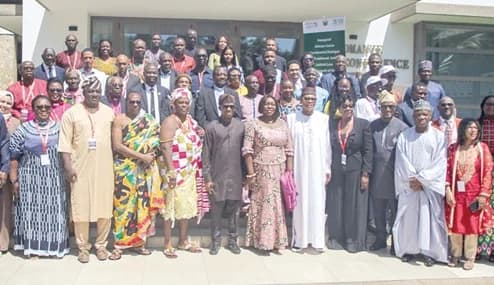
Speaking at an inaugural dialogue in Accra with traditional and religious leaders, Dr. Chambas emphasized that the African Union has been forced to extend its "Silencing the Guns" initiative from its original 2020 target to 2030. He argued that sustainable peace cannot be achieved through military force alone but must be built from within communities. This approach advocates for the integral involvement of women, community stakeholders, and local leaders in conflict resolution. The initiative aims to move beyond addressing the immediate symptoms of violence to tackling the underlying social tensions and root causes of instability that continue to fuel unrest across the continent.
While the AU seeks to foster community-led peace, Transparency International warns that institutional weaknesses are undermining the effectiveness of national security forces. Dr. Michael Ofori Mensah of Transparency International Defence and Security pointed out significant failures in anti-corruption training and procurement processes. Although the Government Defence Integrity Index does not measure corruption directly, it identifies the political and financial risks that lead to governance failures. With defense budgets rising in many African nations, the report suggests that without stronger oversight frameworks, these funds are at high risk of being diverted or mismanaged, further destabilizing the regions they are intended to protect.
The convergence of these findings suggests that Africa's path to peace requires a multi-faceted strategy that combines grassroots peacebuilding with rigorous institutional reform. Experts argue that addressing the "symptoms" of conflict must go hand-in-hand with eliminating the systemic corruption that weakens military efficacy and erodes public trust. As the AU works toward its 2030 goal, the focus must remain on creating transparent, accountable security institutions that work in tandem with local communities to ensure long-term stability and regional growth.
This story touches markets covered on Anansi Intelligence ↗.
More from africa
Continue exploring similar stories


