••
400,000 Chadians Flee Sudan as Humanitarian Crisis Deepens in El-Geneina
•2 min read•3 sources
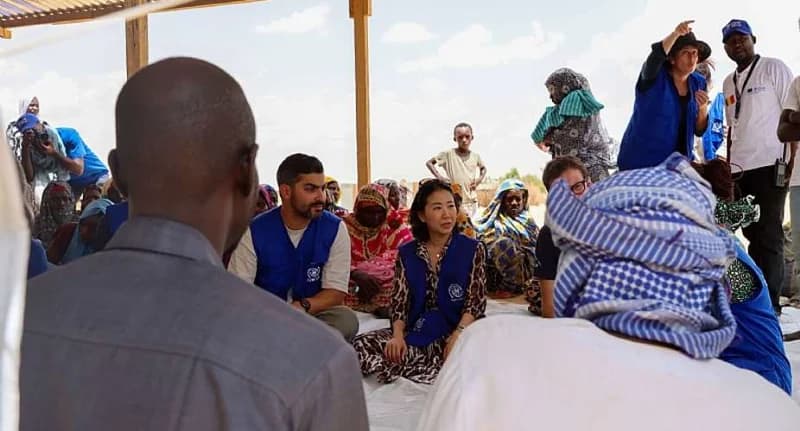
The ongoing civil war in Sudan has triggered a massive humanitarian emergency, with over 400,000 Chadian nationals forced to return to their home country as conditions in the region deteriorate. This mass exodus is part of a larger displacement crisis stemming from a conflict that has reportedly claimed over 50,000 lives and uprooted millions. In eastern Chad, returnees are arriving in dire conditions, lacking essential resources like food and shelter, while across the border in the Sudanese city of El-Geneina, local infrastructure has been completely repurposed to accommodate the swell of internally displaced persons fleeing the violence.
In El-Geneina, which is currently under the control of the Rapid Support Forces (RSF), the lecture halls of the University of El-Geneina's Faculty of Medicine have been transformed into makeshift shelters for approximately 120,000 individuals. The personal toll of the conflict is starkly illustrated by the plight of residents like Zainab, a nurse from Omdurman who lost three of her children during a Sudanese Armed Forces (SAF) attack. Now struggling to provide for her remaining daughters, Zainab is among the thousands enduring a city where the cost of basic necessities like food and water has skyrocketed, and where health and education systems have effectively collapsed.
In response to the growing influx of people into neighboring territories, the International Organization for Migration (IOM) has issued an urgent plea for strengthened international support. The IOM emphasizes that short-term aid is no longer sufficient to address the needs of the 400,000 Chadians who have sought safety in their homeland over the last three years. There is a critical need for comprehensive protection and long-term recovery programs, particularly for women and children who comprise a significant portion of the displaced population and face extreme vulnerability in the host communities of eastern Chad.
The scale of this crisis highlights the devastating regional implications of Sudan’s continued instability. With essential services in cities like El-Geneina decimated and humanitarian aid remaining insufficient, international agencies warn that the situation is becoming increasingly untenable. Without a decisive shift toward long-term developmental support and a resolution to the civil conflict, the cycle of displacement and suffering is expected to intensify, further threatening the stability of the entire Sahel region.
This story touches markets covered on Anansi Intelligence ↗.
More from africa
Continue exploring similar stories


