••
Severe Flooding Paralyzes Cape Coast and Central Region Following Seven-Hour Torrential Downpour
•2 min read•2 sources
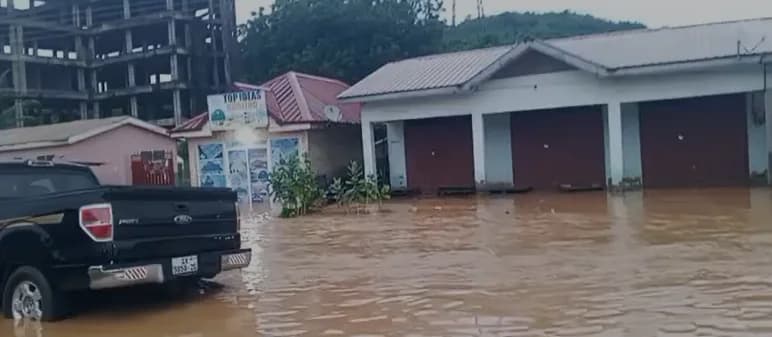
A continuous seven-hour downpour on Friday has left significant parts of the Central Region submerged, causing widespread devastation across the Cape Coast Metropolis, the Abura-Aseibu-Kwamankese District, and the Komenda-Edina-Eguafo-Abirem (KEEA) Municipality. The torrential rains, which were predicted by the Ghana Meteorological Agency, overwhelmed local drainage systems and resulted in the flooding of homes, workplaces, and critical public infrastructure. The scale of the inundation has halted socio-economic activities in the region, leaving many residents displaced as they struggle to salvage their properties from the rising waters.
The impact on transportation and public safety has been particularly severe, with major routes including the N1 Highway becoming nearly impassable. Commuters were forced to abandon their vehicles as floodwaters rose, leading to massive traffic congestion that paralyzed movement for hours. In a near-fatal incident in Moree, a taxi was swept away by the current; however, the occupants were narrowly rescued by local residents who intervened before the vehicle was completely submerged. Notable institutions were not spared, as the Ankaful Communicable Diseases Prison was among the facilities significantly affected by the deluge.
While no casualties have been reported thus far, the disaster has sparked a wave of concern regarding the region's readiness for recurring weather events. Residents in heavily hit areas like Abura and Akyem are calling on authorities to move beyond temporary emergency relief and instead invest in long-term flood mitigation strategies. The repeated failure of existing drainage infrastructure during heavy rains remains a point of contention, with local leaders and citizens demanding a permanent solution to prevent the cyclical displacement and economic loss that have come to characterize the rainy season in the Central Region.
This story touches markets covered on Anansi Intelligence ↗.
More from africa
Continue exploring similar stories


