••
Finance Minister Dr. Cassiel Ato Forson Reports Strong Fiscal Performance as Government Surpasses T-Bill Target by 30%
•2 min read•5 sources
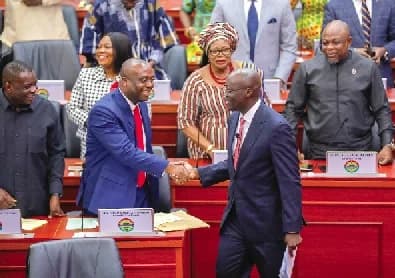
The Ghanaian government has demonstrated strong fiscal momentum as the Ministry of Finance reported a significant oversubscription in its latest Treasury bill auction, coinciding with the presentation of the 2026 Mid-Year Budget Review on July 23, 2026. Finance Minister Dr. Cassiel Ato Forson presented a performance report highlighting improved fiscal discipline, narrowed expenditure, and a downward trend in interest rates. The market responded positively to the review, with investors heavily backing government securities, signaling growing confidence in the administration's economic management under President John Mahama.
Data from the Bank of Ghana reveals that the government exceeded its Treasury bill target by 30.3% during the auction week. Total bids reached GH"12.3 billion, of which GH"11.5 billion were accepted. The 364-day bill emerged as the most attractive instrument, accounting for 65.5% of total bids with an uptake of GH"7.8 billion. This surge in demand has been accompanied by a consistent decline in yields across the curve; interest rates for the 91-day bill dropped to 5.76%, while the 182-day and 364-day bills fell to 7.68% and 12.96%, respectively.
Beyond the domestic debt market, the first half of 2026 showed a marked improvement in the country’s broader fiscal health. Revenue collection for the period reached GH"124.8 billion, nearly hitting the GH"126.1 billion target, driven largely by robust corporate tax receipts which offset lower-than-expected oil revenues. On the expenditure side, the government maintained tight control, spending GH"136.9 billion—significantly lower than the planned GH"172.5 billion. This disciplined approach enabled the state to save GH"6.9 billion in interest payments and clear GH"5.3 billion in outstanding arrears.
The Finance Minister attributed this performance to enhanced domestic tax mobilization and a commitment to effective budget management. By successfully clearing arrears without accumulating new debt obligations, the government has signaled a departure from previous cycles of fiscal slippage. Moving forward, the administration aims to sustain this fiscal discipline to further lower borrowing costs and provide the necessary fiscal space for the developmental projects outlined in the 2026 budget cycle.
This story touches markets covered on Anansi Intelligence ↗.
Related topic
John Mahama: Latest News & Updates →More from business
Continue exploring similar stories


