••
Finance Minister Ato Forson Under Fire as Bank of Ghana Sale Proposals and Inter-Ministerial Budget Wars Spark Governance Crisis
•3 min read•9 sources
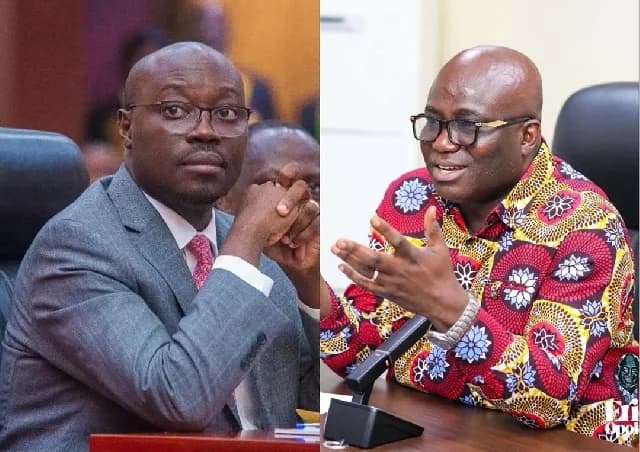
Ghana’s political landscape is currently gripped by a series of high-stakes disputes involving the Ministry of Finance and its head, Dr. Cassiel Ato Forson. At the center of the storm is a heated debate over the future of the Bank of Ghana’s (BoG) new $260 million headquarters and a public 'budget war' between the Finance Ministry and the Ministry of Food and Agriculture (MoFA). The New Patriotic Party (NPP) has intensified its demands for the government to formally and permanently abandon any plans for a 'sell-and-leaseback' arrangement for the central bank’s premises. While the BoG has denied reports of a potential sale, Dr. Mohammed Amin Adam and the NPP Finance Committee argue that the denial lacks credibility, citing previous public statements made by Dr. Forson in March 2025 suggesting such a move. The opposition warns that treating the headquarters as a distressed asset would burden the state with long-term liabilities and weaken the bank’s operational integrity.
Simultaneously, a significant transparency crisis has emerged regarding agricultural funding for the 2026 fiscal year. The Ministry of Finance claims to have disbursed over GH¢1.67 billion to support agricultural programs, providing documentation from the Ghana Integrated Financial Management Information System (GIFMIS) to support its position. However, MoFA, led by Minister Eric Opoku, has sharply contested these figures, asserting that only a fraction of that amount—roughly GH¢244.3 million—has actually been received. This discrepancy has halted key initiatives, with the Ghana Federation of Labour’s Secretary-General, Abraham Koomson, suggesting that past legal issues and cautious fund management may be fueling the misunderstanding. Critics, including NPP’s Dennis Miracles Aboagye, have labeled the dispute as a sign of 'weak leadership' under President John Dramani Mahama, further complicated by the fact that both Dr. Forson and Eric Opoku are seen as rivals for the NDC’s 2028 presidential nomination.
Beyond the ministerial friction, the administration faces growing pressure over its broader economic and trade policies. In the energy sector, Dr. Matthew Opoku Prempeh’s suggestion that the state should exit gas processing has met fierce resistance. Analysts such as Samuel Ackom argue that privatizing infrastructure like the Atuabo Gas Processing Plant would be an 'oversimplification' that ignores the state’s role in lowering LPG costs and electricity tariffs. Meanwhile, the trade and logistics sector is on high alert following the re-emergence of the Advance Cargo Information (ACI) system. Despite previous rejection by the Trade Ministry, the Ministry of Transport is now pushing the cargo-tracking fee, which industry players fear will duplicate existing systems like ICUMS and impose unnecessary costs on consumers and importers.
The converging crises highlight a growing need for improved inter-ministerial coordination and financial transparency. As the NPP calls for a detailed, public recapitalization plan for the Bank of Ghana to replace 'expensive borrowing mechanisms,' the administration is also being urged to resolve the accounting discrepancies between the Finance and Agriculture ministries to protect national food security. These internal conflicts not only threaten the implementation of critical government programs but also provide the opposition with significant ammunition to question the coherence and effectiveness of the Mahama administration’s economic management ahead of future electoral cycles.
This story touches markets covered on Anansi Intelligence ↗.
Related topic
NDC (National Democratic Congress): Latest News →More from politics
Continue exploring similar stories


