••
Finance Minister Dr. Cassiel Ato Forson Unveils $3.5 Billion Investment and 1,200MW Power Project to Revitalize Ghana's Energy Sector
•3 min read•4 sources
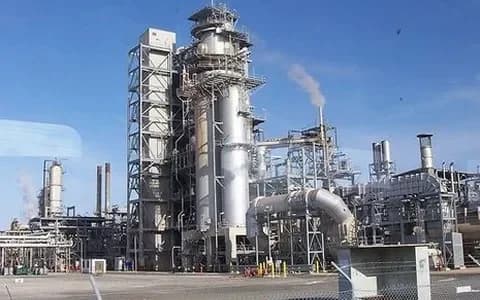
The Government of Ghana, under the administration of President John Mahama, has secured over US$3.5 billion in investment commitments to revitalize the country's upstream oil and gas industry. Presenting the 2026 Mid-Year Budget Review in Accra, Finance Minister Dr. Cassiel Ato Forson detailed a comprehensive strategy to reverse a sharp decline in crude oil production, which fell from 71.4 million barrels in 2019 to approximately 36 million barrels by 2025. The new capital injection is specifically targeted at the Jubilee and Offshore Cape Three Points (OCTP) fields, signaling a major push to restore the sector's productivity through investor-friendly reforms and legislative updates expected to reach Parliament by the end of the year.
In tandem with upstream efforts, the government is launching a massive infrastructure project to expand domestic power generation by 1,200 megawatts (MW). This initiative includes the construction of a new gas processing plant designed to handle 100 million standard cubic feet of gas daily, developed in partnership with the private sector. A key component of this expansion is a combined-cycle power plant at Kafodzidzi-Abrobeano, with the first phase scheduled for commissioning by 2028. This energy boost is projected to create nearly 1,000 jobs and generate approximately US$2 billion in savings and tax revenue over five years, while potentially reducing electricity tariffs for consumers by 10% to 20%.
Complementing these industrial developments, the Bank of Ghana has reported a robust performance for the nation's Petroleum Funds in the first half of 2026. The funds closed the period with a combined balance of US$1.64 billion, derived from five crude oil liftings across the Jubilee, Sankofa-Gye Nyame, and TEN fields. While the Ghana Stabilisation Fund saw a withdrawal of US$132.94 million to support fiscal requirements, ending with a balance of US$182.68 million, the Ghana Heritage Fund remained untouched, growing to US$1.46 billion. The funds also generated a net income of US$27.79 million during this six-month window, reflecting disciplined management under the Petroleum Revenue Management Act.
These strategic moves mark a pivotal moment for Ghana’s economic landscape as the government seeks to secure energy sovereignty and fiscal stability. By integrating upstream investment with downstream infrastructure and transparent revenue management, the administration aims to ensure that petroleum resources directly translate into lower living costs and industrial growth. As the Ministry of Finance prepares to submit new petroleum sector amendments to Parliament, the focus remains on sustaining production increases at the Jubilee and Sankofa fields to meet a target of 350 million standard cubic feet of gas per day, further solidifying Ghana's position as a regional energy hub.
This story touches markets covered on Anansi Intelligence ↗.
Related topic
John Mahama: Latest News & Updates →More from business
Continue exploring similar stories


