••
Prof. Appiagyei-Atua Champions Student Academic Freedom Amidst Ghana-Russia Educational Expansion and Law Student Leadership Changes
•3 min read•3 sources
Ghana's educational landscape is undergoing a period of significant reflection and expansion, highlighted by calls for increased student agency and the strengthening of international academic partnerships. At the University of Ghana’s ninth Inaugural Lecture for the 2025/2026 academic year, Prof. Kwadwo Appiagyei-Atua delivered a compelling address titled "The Student Question: Reclaiming Academic Freedom for Democratic Renewal in Africa." He argued that the academic freedom of students is not merely a campus issue but is central to the democratic future of the continent. Prof. Appiagyei-Atua noted that the historical marginalization of students in university governance has hindered their ability to participate meaningfully in broader democratic processes, calling for a transition toward collaborative governance models.
This push for more active student participation in governance is reflected in recent leadership transitions within the professional student body. Dr. Desmond Kofi Annan of the Class Media Group was recently elected as the leader of the Legal Green Association (LGA) for the 2026/2027 academic year. Securing 56.7% of the total votes, Dr. Annan’s election saw a 64% voter turnout among registered professional law students. Alongside his newly elected executive team—including Deputy Leader Agyeman Caleb Osei and General Secretary Abena Danquah Okai—Dr. Annan is tasked with enhancing student representation and welfare, echoing Prof. Appiagyei-Atua’s sentiment that robust student involvement is vital for institutional health and democratic renewal.
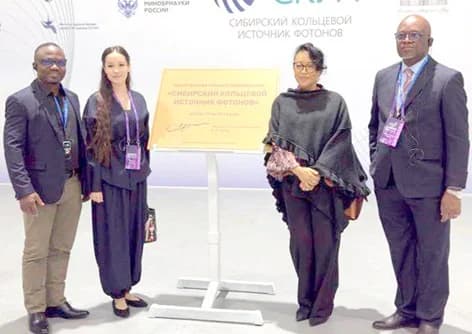
Beyond internal governance, Ghana is also aggressively expanding its international educational footprint through renewed cooperation with the Russian Federation. During the Technoprom-2026 forum in Russia, Ghana’s Ambassador emphasized the critical need to equip graduates with technical skills capable of transforming the national economy. This partnership involves expanding linguistic and educational programs through the Center for Public Diplomacy to prepare Ghanaian students for Russian universities. These initiatives aim to foster scientific and cultural exchange, ensuring that expertise gained abroad can be effectively reintegrated into Ghana’s development, with a significant increase in student participation expected through 2026.
The convergence of these developments—from the theoretical call for academic freedom at the University of Ghana to the practical exercise of student leadership and the broadening of international cooperation—indicates a holistic approach to educational reform. As universities move toward democratized classroom experiences and collaborative governance, and as the nation deepens its ties with global partners like Russia, the focus remains on preparing a new generation of leaders. These efforts are designed to ensure that Ghanaian graduates are not only academically qualified but are also empowered democratic actors capable of contributing to both national and global economic landscapes.


