••
Traditional Leadership and Alumni Step Up to Transform Educational Infrastructure in Dzodze and Somanya
•2 min read•8 sources
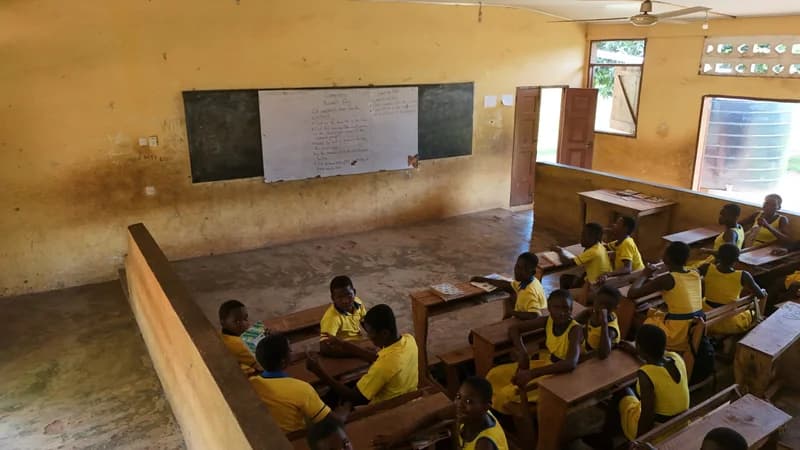
Community-led initiatives and the involvement of traditional authorities are proving pivotal in addressing infrastructure gaps within Ghana’s education sector. In the Ketu North Municipality and Yilo Krobo District, local leaders and successful alumni have recently taken the lead in renovating and constructing essential school facilities. These efforts aim to ensure a conducive learning environment for students by bridging the gap between government-initiated projects and the immediate needs of local academic institutions.
In Dzodze-Tove, residents have commended Torgbui Adzenu III, the Divisional Chief of Dzodze Apeyeme-Agorgorme, for his instrumental role in facilitating a new six-unit classroom block project. While the project was initiated by the government, the Chief’s personal contribution of heavy machinery for site clearance and the reshaping of access roads has been credited with accelerating the construction schedule. This intervention follows his previous support for the rehabilitation of the Dzodze Apeyeme Central Junior High School, which had been severely damaged by flooding. Torgbui Adzenu III emphasized that his commitment to education remains a cornerstone of his leadership, urging residents to collaborate on future socio-economic development efforts.
Similarly, in Somanya, Nene Tetteh Nanor Odjidji II—an alumnus and CEO of Dromi Homes—has pledged a comprehensive facelift for the New Somanya Methodist Junior High School. Following a visit where he described the school’s current state as "unacceptable," Nene Odjidji II committed to upgrading the ICT lab, providing new classroom furniture, and improving sanitation facilities. Beyond physical infrastructure, he addressed the human element of education by pledging to work with teachers and parents to tackle student discipline and provide financial support for graduates transitioning to Senior High School.
These separate but parallel efforts underscore a growing trend of localized intervention as a catalyst for national development. By rallying former students and leveraging local resources, these leaders are not only improving buildings but also restoring the morale of both staff and students. The initiatives serve as a rallying cry for other traditional leaders and alumni across the country to take active roles in the restoration and maintenance of their local educational institutions to ensure quality learning for future generations.
This story touches markets covered on Anansi Intelligence ↗.
More from education
Continue exploring similar stories


