••
Bridging Africa's Infrastructure Execution Gap: From Continental Investment Challenges to Local Ghanaian Project Success
•3 min read•10 sources
The African continent is currently facing a critical "execution gap" in its infrastructure development, where the ability to raise capital far outpaces the capacity to deliver tangible projects. While the African Development Bank estimates a staggering annual infrastructure need of $400 billion, experts from the Project Management Institute and academia highlight that financing alone is insufficient. McKinsey reports indicate a nearly 80% failure rate for projects during the initial planning and feasibility stages, with fewer than 10% actually reaching financial closure. This disparity is starkly illustrated in South Africa, where only about 42% of the $91 billion in secured investment pledges has successfully flowed into the economy, highlighting a systemic struggle to translate capital into operational infrastructure.
Bridging this gap requires a fundamental paradigm shift toward strengthening upstream project preparation and management capabilities. The current lack of a well-prepared pipeline of "bankable" projects is compounded by a looming deficit of approximately 2.5 million project professionals across the continent by 2035. Without enhancing institutional capacity and developing specialized skills, ambitious infrastructure goals will remain unfulfilled. Authors George Asamani and Lavagnon Ika argue that the sophistication of capital-raising must be matched by equal rigor in project execution to ensure that investments lead to effective, long-term development outcomes.
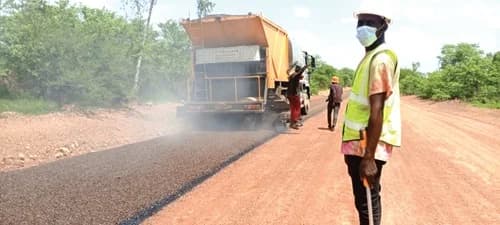
In Ghana, the practical realities of this execution challenge are evident in both the resumption of long-stalled projects and the pursuit of new international partnerships. After years of inactivity, construction has finally resumed on the 29.9-kilometer Bolgatanga-Sherigu-Naaga road. The contractor, ARACO Construction Limited, has completed 10 kilometers of prime seal work and commenced bituminous surfacing on another 15 kilometers. While the return of heavy equipment has brought relief to local farmers and traders who rely on the route for commerce, the project still faces hurdles typical of the execution gap, specifically historical delays related to payment certificates.
Simultaneously, local authorities are seeking to circumvent these challenges through direct international cooperation. In the Atwima Kwanwoma District, District Chief Executive Mrs. Grace Agyemang Asamoah is actively pursuing partnerships with Italian water technology firms following a recent bilateral workshop in Accra. By focusing on technology transfer and sustainable infrastructure improvements, the district aims to address an increasing demand for potable water. Such initiatives reflect a growing recognition that closing the infrastructure gap requires not just funding, but the integration of modern technical expertise and reliable business partnerships.
Ultimately, Africa’s path to economic growth is inextricably linked to its ability to move projects from the boardroom to the ground. Whether it is the completion of critical transport corridors in the Upper East Region or the expansion of water access in the Ashanti Region, the success of these endeavors hinges on resolving the systemic inefficiencies of the execution gap. As the continent looks toward 2035, the focus must remain on building a robust workforce of project professionals and refining institutional processes to ensure that every dollar pledged results in a better quality of life for its citizens.
This story touches markets covered on Anansi Intelligence ↗.
Live rates
Dollar to cedi rate →More from africa
Continue exploring similar stories


