••
Strengthening African Sovereignty: Regional Leaders and Human Rights Advocates Push for Homegrown Solutions Amid Rising Conflict
•3 min read•15 sources
The African continent is currently navigating a complex landscape of severe human rights violations and a renewed diplomatic push for self-reliance. Recent reports from Human Rights Watch have brought international attention to the eastern Democratic Republic of Congo, specifically the city of Uvira, where M23 rebels and Rwandan forces allegedly executed at least 53 civilians and committed numerous acts of sexual violence. Similar tensions regarding civilian safety are echoed in Nigeria, where the military has denied reports of over 100 civilian casualties following an airstrike in Zamfara State, despite conflicting accounts from Amnesty International. These incidents highlight a persistent gap in protection for vulnerable populations, including rural women who, according to advocates like Gifty Nyarko, face the dual burdens of domestic violence and climate-induced hardship in silence.
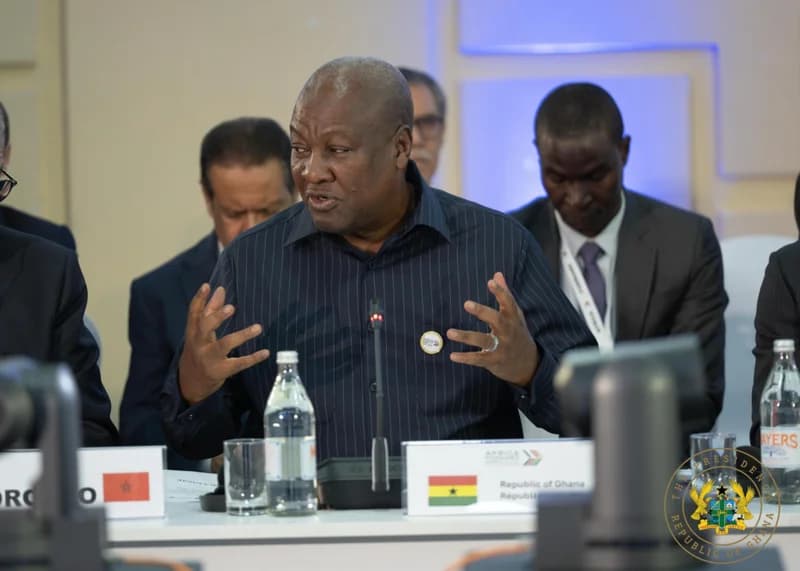
In response to these systemic challenges, African leaders and international partners are advocating for a shift toward "African-led solutions." During a high-level visit to the African Union in Addis Ababa, French President Emmanuel Macron emphasized that the continent must spearhead its own political and security responses. This sentiment was echoed at the Africa Forward Summit in Nairobi, where Ghana's President John Mahama introduced the 'Accra Reset' initiative. Mahama warned that rising debt burdens are crippling the 'health sovereignty' of African nations, urging a transition from dialogue to concrete action in building resilient healthcare, education, and agricultural systems that can withstand global economic shocks.
Central to this drive for stability is the push for enhanced human rights education across the continent. Dr. Kingsley Agyemang, Vice-Chairman of Ghana’s Parliamentary Human Rights Committee, recently urged African nations at a session in The Gambia to integrate human rights studies into school curricula. Agyemang argues that empowering citizens to understand their rights is the most effective way to hold authorities accountable and curb the cycle of violence linked to armed conflict and weak social systems. By fostering community dialogues and protecting basic needs like healthcare and clean water, advocates believe the continent can move toward more transparent governance and improved living conditions for all.
However, the path toward a unified Pan-African future remains obstructed by internal contradictions, most notably the rise of Afrophobia and xenophobia. Recent attacks against migrants in South Africa have sparked a debate on the unfinished struggle for continental unity and the colonial mindsets that continue to breed division. While leaders like Mahama push for reparatory justice for historical slavery through the African Union, social commentators emphasize the need for 'Ubuntu'—the philosophy of interconnectedness—to combat economic-driven tensions. As Africa seeks to navigate these hurdles, the focus remains on balancing immediate humanitarian intervention with long-term structural reforms in education, migration policy, and economic integration.
This story touches markets covered on Anansi Intelligence ↗.
Related topic
John Mahama: Latest News & Updates →More from africa
Continue exploring similar stories


