••
Africa Confronts Climate Crisis: Devastating Floods in the East and Resilience Initiatives in Ghana
•3 min read•12 sources
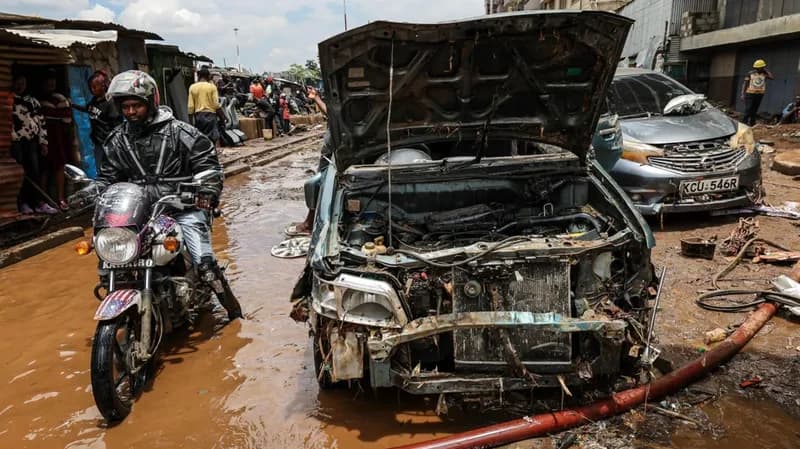
The African continent is currently facing a dual reality of immediate climate-induced disasters and proactive long-term mitigation strategies. In East Africa, a humanitarian crisis is unfolding as heavy rains and severe flooding have claimed at least 62 lives in Kenya and over 100 in neighboring Ethiopia. The Kenya Red Cross has been engaged in high-stakes rescues in Nairobi, including saving children from submerged homes and commuters from stranded vehicles. President William Ruto has mobilized emergency supplies to address the flash floods, which have decimated homes, roads, and utility networks. Experts point to climate change as the primary driver intensifying these extreme rainfall patterns, highlighting the urgent need for robust disaster management frameworks across the region.
Simultaneously, Ghana is intensifying its efforts to build climate resilience through community-led initiatives and international partnerships. In Accra, stakeholders recently validated a baseline study for a regional coastal resilience project funded by the Adaptation Fund and coordinated by UN-Habitat. This initiative targets 11 vulnerable coastal communities facing the existential threats of erosion and flooding, aiming to implement adaptive infrastructure and sustainable livelihoods. Further inland, the Wildlife Division of the Forestry Commission has inaugurated four Community Resource Management Areas (CREMAs) in the Gbele Ecological Landscape. These CREMAs, supported by the Ghana Landscape Restoration and Small-Scale Mining Project, empower 66 local communities to manage over 244,000 hectares of land, focusing on restoration and sustainable natural resource management to combat deforestation and climate impacts.
While high-level conservation projects are underway, rural infrastructure remains a critical bottleneck for local economies. In the Wa Municipality, farmers in Boli are struggling with the deteriorating condition of the Wa–Danku–Sing–Boli road. The dilapidated state of this vital artery has spiked transport costs and hindered access to healthcare and education, prompting warnings from local leaders that farmers may soon abandon their lands. Meanwhile, the Electricity Company of Ghana (ECG) is navigating its own infrastructure challenges, balancing planned maintenance in the Tema Region with emergency restoration efforts in the Ashanti Region following a destructive rainstorm. These localized struggles underscore the vital link between functional infrastructure and the success of broader environmental and economic resilience strategies.
The synthesis of these events highlights a continent at a crossroads, where the urgency of emergency response must be matched by the sustainability of local infrastructure and conservation efforts. From the flood-stricken streets of Nairobi to the coastal villages of Ghana and the agricultural hubs of the Upper West Region, the message from stakeholders is clear: inclusive community participation and accurate data are essential for survival. As government agencies like the Ghana Wildlife Society and the Forestry Commission push for financial sustainability in conservation, the integration of environmental protection into district-level planning will be the deciding factor in safeguarding both lives and livelihoods against an increasingly volatile climate.
This story touches markets covered on Anansi Intelligence ↗.
More from africa
Continue exploring similar stories


